
Best Pokies in Melbourne 2026: Venues, Rules and Payouts

With so many venues and platforms competing for your attention in Melbourne, it helps to see how different operators stack up before you decide where to play pokies in 2026.
Thor Casino is an online gaming brand that appears on operator shortlists for players exploring pokies-style entertainment options.
Betvictor is a well-established betting and gaming brand recognised for its broad presence in the wagering and casino space.
Tabcorp is a major Australian gambling operator with a long-standing footprint in the local wagering and gaming industry.
Vegaz Casino is an online casino brand featured among options for players seeking a pokies-focused gaming experience.
Jeetcity Casino is an online casino operator that features on lists of platforms catering to pokies enthusiasts.
JustCasino is a straightforwardly named online casino brand included among options for pokies players.
WinSpirit Casino is an online gaming platform noted as one of the choices available to pokies fans.
Betfair is a globally recognised betting exchange and gaming brand with a strong reputation in the wagering industry.
CasinoStars is an online casino brand listed as an option for those browsing pokies platforms.
Lucky Dreams is an online casino operator included among the choices available to players interested in pokies.
Understanding Melbourne’s Pokies Landscape in 2026
I lost more money to a Queen of the Nile machine in a suburban pub than I’m comfortable admitting, and it took me years to actually understand why the machine behaved the way it did, why the venue looked the way it looked, and why nobody could tell me a straight answer about the rules. So before we get into which venues and machines are worth your time in Melbourne this year, I want to walk through how this whole thing is actually structured. It matters, because the rules change depending on which side of a state border you’re standing on, and most players have no idea.
There’s no single set of rules for the whole country
Here’s the first thing that surprised me when I actually looked into it: Australia doesn’t have one gambling law that covers everyone. There’s no national regulator sitting in Canberra that you can point to and say "that’s who’s in charge." Instead, regulation is split between the states and territories on one side, and the federal government on the other, and they don’t always agree on what "responsible" looks like.
That split explains a lot of the confusion you’ll run into if you’ve ever gambled in more than one state and wondered why things felt different. Because they are different. Each state government sets its own rules for what are officially called gaming machines — the term you’ll see on every piece of regulator paperwork, even though everyone in the room calls them pokies. Victoria’s rules aren’t Queensland’s rules, and Queensland’s rules aren’t Western Australia’s rules. If you’ve only ever played in Melbourne, you might assume the machine limits and floor rules you know are just "how pokies work." They’re not. They’re how pokies work here.
I found this out the hard way on a work trip to Perth, walking into what I assumed would be a normal pub with a bank of machines in the corner, the way you’d find in half the pubs in North Melbourne. There weren’t any. Turns out Western Australia locked electronic gaming machines to a single location in the entire state — the Crown Perth casino floor, and nowhere else. No pub pokies, no club pokies, nothing tucked in the corner of the local RSL. Just one venue, one casino floor, holding somewhere around 2,500 machines. Compare that to New South Wales, which has over 87,000 machines spread across more than 2,000 venues — pubs, clubs, the works. Same country, completely different landscape. Victoria sits somewhere in between: gaming machines show up in casinos, pubs and clubs, but the state puts firmer limits on how those machines behave once you’re sitting in front of one.
A short history nobody tells you at the pub
New South Wales legalized poker machines back in 1956 — the first state in the country to do it. That’s not just trivia; it’s the reason NSW ended up with the density of machines it has now. Decades of head start meant decades of pubs and clubs installing machines while other states were still arguing about whether to allow them at all. Victoria came to the party later and, when it did, built a system that leaned more heavily on casino-style regulation alongside the pub and club network — which is part of why Crown Melbourne became the centre of gravity for the state’s pokies scene rather than a corner pub in the western suburbs.
That history is why the “landscape” in the section title actually means something specific in Victoria. You’re not just choosing between machines. You’re choosing between a small suburban venue with a handful of machines running the state’s standard limits, and a casino floor with an entirely different set of layouts, denominations, and — as we’ll get into in a later section — payout behaviour.
What "regulated" actually looks like on the floor
I used to think "regulated" meant a certificate on a wall somewhere and nothing else. It means more than that in practice, and it shows up in things you’ll actually notice if you’re paying attention.
Take return rates. In Queensland, gaming machines in pubs and clubs are required to return at least 85% over time, and casino machines need to hit at least 90%. Western Australia sets its casino-restricted machines at a 90% minimum too. These aren’t marketing numbers venues put on a sign — they’re floor minimums set by regulation, and they differ by venue type and by state. Victoria runs its own version of this with a state-set minimum return, which I’ll come back to properly in the payout section rather than double up here.
What you will notice on a Victorian floor, and what a lot of interstate visitors don’t expect, is the state’s approach to session limits. Victoria sets a default 24-hour loss limit of $50 and caps the maximum cash you can load into a machine per session at $100. That’s not a suggestion. It’s baked into how the machines are configured. If you’ve played in a state without that kind of default ceiling, sitting down at a Melbourne machine can feel oddly restrictive at first — you can’t just keep feeding notes in indefinitely the way you might elsewhere. I remember being mildly annoyed by this the first time I ran into it, mostly because I didn’t understand why, and then later being grateful for the exact same reason, because it forced a stopping point I wouldn’t have chosen for myself.
From 1 December 2025, Victoria goes a step further with mandatory carded play across the state’s gaming machines. That means the anonymous, walk-up-and-feed-cash-in style of play that’s defined pokies for most of my adult life is on its way out in Victoria specifically. You’ll need a card linked to your identity to play, which ties directly into the state’s loss-limit system — the card is what lets the machine and the venue actually track your $50 default limit instead of just trusting you to self-regulate, which, if I’m honest about my own history with these machines, was never going to work.
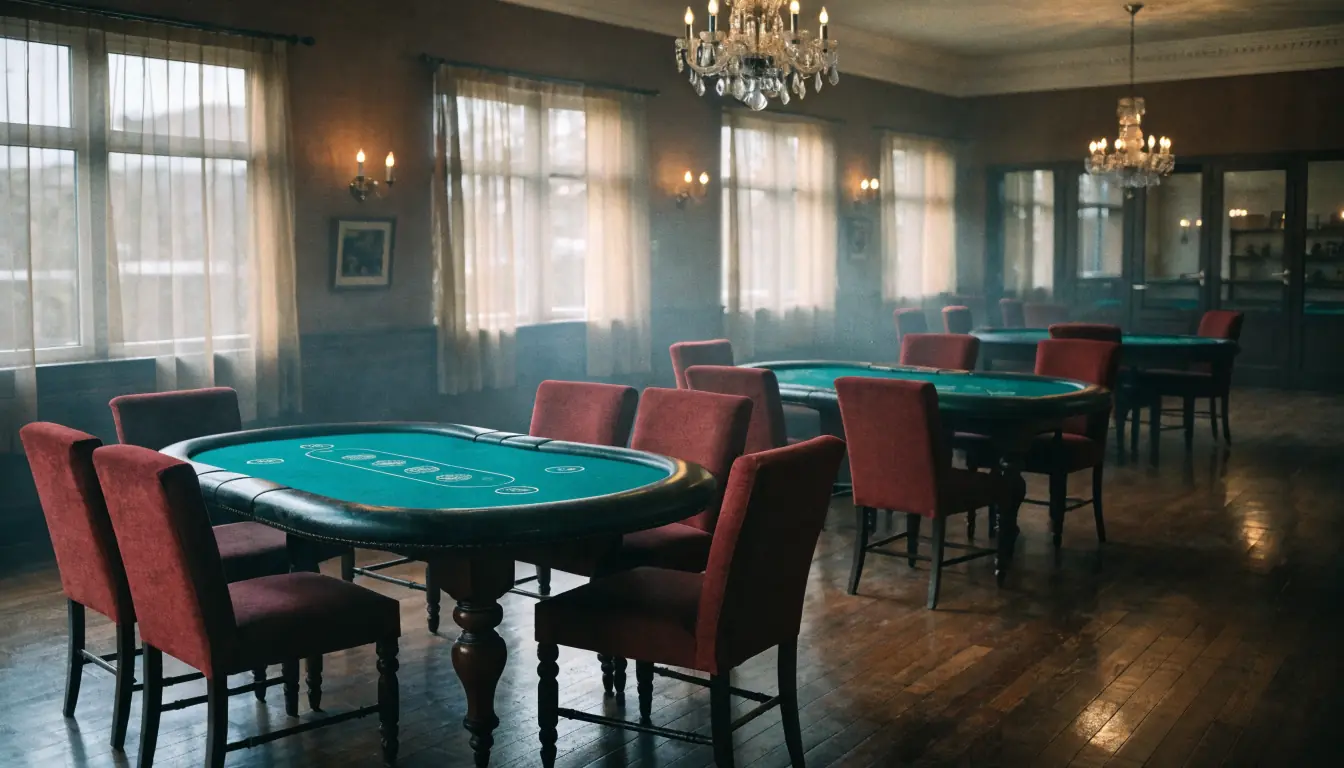
This is a genuinely different landscape than the one Melbourne pokies players walked into even a couple of years back. If you’re planning venue visits into 2026, carded play isn’t a future rumour — it’s the operating reality you’ll meet at the door.
Where you’ll actually find machines around the city
Melbourne’s pokies venues aren’t clustered in one obvious spot — they’re spread across pretty different environments, and each one plays a little differently depending on what it’s built around.
The CBD and around Melbourne Central. This is dense hospitality territory — bars, pubs, and venues built around foot traffic from the retail and transit hub. Machines here tend to sit inside pubs that are just as focused on food and drink turnover as they are on the gaming room, so the room itself is often smaller and tucked away rather than being the main event.
North Melbourne. More residential, more local-pub energy. The venues here read like neighbourhood locals first, gaming rooms second — the kind of place where the same handful of regulars know the staff by name. If you want a low-key session away from tourist traffic, this is closer to what you’re after.
South Melbourne and Port Melbourne. These two get lumped together a lot because they share that inner-bayside feel, but they’re not identical. Port Melbourne’s venues skew toward the docklands and waterfront crowd, while South Melbourne’s are woven into a more mixed retail-and-residential strip. Both tend to have smaller gaming floors than what you’d find in the CBD, which honestly makes them easier to walk into without feeling like you need a plan.
East Melbourne. Quieter, more residential, fewer venues generally — this isn’t where you go looking for a big bank of machines, it’s where you might stumble into one attached to a pub that’s been there for decades.

The western suburbs. This is where you’ll find some of the bigger club-style venues, the kind built around larger memberships and bigger gaming rooms alongside bistros and function spaces. If NSW’s model of pub-and-club density has an equivalent inside Victoria, the western suburbs venues are probably the closest thing to it.
Machines are found in dense hospitality venues around the CBD and Melbourne Central, often tucked inside smaller pubs with limited floor space.
A residential area with local‑pub style venues where a handful of regulars know the staff; ideal for low‑key sessions away from tourist traffic.
South Melbourne offers mixed retail‑residential strips while Port Melbourne leans toward docklands crowds; both have smaller gaming floors than the CBD.
Larger club‑style venues with bigger gaming rooms, often attached to bistros and function spaces, providing a more extensive pokies selection.
Near Melbourne Airport. Airport-adjacent venues are a category of their own — built around travellers with a layover or an early flight, hotel-attached gaming rooms rather than standalone locals. Don’t expect the same atmosphere as a CBD pub; it’s a different crowd entirely, usually smaller sessions, people killing time rather than settling in for a night.
And then there’s Crown Melbourne, which functions as its own ecosystem rather than just another venue on this list — the scale of the machine floor, the range of denominations, and the sheer variety of themes put it in a different category to a pub with a dozen machines in the corner. I’ll get into what Crown does differently, especially around its online offering, in the next section — that’s a separate conversation to the land-based floor we’re mapping out here.
Player limits: what actually applies to you in Victoria
If you’re used to a state where the machine just lets you keep going until you decide to stop, Victoria’s structure is going to feel like a shift. The default loss limit — $50 in any 24-hour period — is exactly that: a default. It’s not a suggestion venues make; it’s built into the state’s gaming machine framework. Layer the $100 maximum cash load per session on top of that, and you’ve got a system that’s actively trying to create natural stopping points rather than relying on you to notice them yourself.
I’ll be straight about this: the first time I hit that $50 default limit without realizing it existed, I assumed the machine was broken. It wasn’t. It was doing exactly what it was built to do. Took me looking it up afterward to understand that Victoria had set that ceiling as a baseline protection, not a malfunction.
Combine that with mandatory carded play landing in December 2025, and Victoria’s pokies landscape by 2026 looks meaningfully different from what long-time players might remember. Carded play means the venue — and by extension the state’s monitoring system — can actually enforce that $50 default rather than hoping players self-police. If you’ve been away from Melbourne venues for a while, this is the single biggest structural change you’ll walk back into.
The 2020 shutdown, and why it still matters
It’s easy to forget now, but during the 2020 COVID-19 pandemic every single Australian venue with poker machines was closed. Not reduced hours, not limited capacity — closed, fully, with usage dropping to zero across the country. I remember driving past a local that had never once, in my memory, had its lights off, and seeing it dark for months.
I bring this up not for nostalgia but because it’s relevant to how the current landscape got built. The shutdown forced venues, regulators and the industry itself to rethink infrastructure in ways that are still playing out — the push toward carded play in Victoria didn’t come from nowhere, and the broader conversation about tracking play and enforcing limits picked up real momentum once everyone had sat through months of machines sitting completely dark and idle. It’s a reminder that this landscape isn’t static. What you’ll find on a Melbourne floor in 2026 is the product of years of regulatory tightening, and the pandemic shutdown was one of the clearer turning points in that timeline.
Where online fits into the picture — briefly
I’m not going to get into Crown’s online offering here, or the legal detail around interactive gambling — that’s its own section coming next, and it deserves the space rather than a rushed paragraph. But it’s worth flagging one thing while we’re mapping out the broader landscape: the online gaming industry as a whole is worth billions of dollars and it keeps growing at a pace that land-based venues simply can’t match. That growth is part of the backdrop pushing regulators toward things like carded play and tighter session limits on physical machines — venues and regulators alike are very aware that players have an online alternative sitting in their pocket, and that shapes decisions about what the land-based experience needs to offer to stay relevant.
On the enforcement side, it’s also worth knowing that the regulator responsible for policing illegal online gambling access, ACMA, has blocked more than 1,564 illegal gambling sites since November 2019 through what’s called a s.313 referral process — essentially ordering internet providers to cut access. That’s a federal-level tool sitting alongside the state-by-state land-based rules we’ve been walking through, and it’s a good illustration of exactly the split structure I mentioned at the start: state governments write the rules for the pub down the road, and a federal body handles the online side of the fight. Two different systems, two different sets of teeth.
What actually happens to your winnings
One thing that trips up a lot of people, myself included the first time it came up at tax time: gambling winnings aren’t counted as assessable income for non-professional Australian residents. If you have a good night on a machine at a venue near Melbourne Central, or you cash out after a session in the western suburbs, that money isn’t something the tax office expects you to declare the way you would wages or investment income. This isn’t a loophole or a grey area — it’s simply how the income rules are written for recreational players. Worth knowing before you convince yourself you need to set some of it aside for a return you don’t actually owe.
A quick map of the state-by-state differences
Since so much of this section has been about how Victoria compares to everywhere else, it’s worth laying the core differences out plainly rather than leaving them scattered through the text above.
| State | Where machines are found | Return rate rule | Notable structural feature |
|---|---|---|---|
| New South Wales | Pubs, clubs, casinos — over 2,195 venues | — | First state to legalize poker machines, in 1956; largest machine count nationally at 87,298 |
| Victoria | Casinos, pubs, clubs | Minimum return rate applies (detailed in a later section) | Default 24-hour loss limit of $50; $100 max cash load per session; mandatory carded play from 1 December 2025 |
| Queensland | Pubs, clubs, casinos | At least 85% in pubs/clubs, at least 90% in casinos | Two-tier return rate depending on venue type |
| Western Australia | Crown Perth casino floor only | Minimum 90% | No pub or club machines anywhere in the state; roughly 2,500 machines total, all on one floor |
None of these systems talks to the others directly — that’s the reality of a country without one central gambling authority. What’s legal, tracked, and limited in Melbourne isn’t necessarily legal, tracked, or limited the same way an hour’s flight away. If you’re building a picture of "the best pokies in Melbourne" for 2026, that Victoria-specific mix of loss limits, upcoming carded play, and the pub/club/casino venue spread is the actual landscape you’re walking into — not a generic national one.
Why this groundwork matters before you pick a venue
I’ve spent more words here on rules and structure than on any specific machine or venue, and that’s deliberate. Every recommendation that follows — every "this venue is worth a visit" or "this casino floor is worth your time" — sits on top of this framework. A venue in the western suburbs with a big gaming room isn’t operating under different rules than a small pub near Melbourne Central. They’re both inside the same $50 default loss limit, the same incoming carded-play requirement, the same state-set minimum return structure. Understanding that first means you’re not surprised by anything once you’re actually standing in front of a machine.
Know the rules going in. Everything else is easier.
Crown Melbourne’s Online Pokies: What’s Allowed and What’s Not
I spent a solid chunk of one bored Tuesday typing "Crown Melbourne online pokies" into Google, half expecting a login screen. What I got instead was a lesson in how Australian law actually treats this stuff — and it’s blunter than most people assume.
Illegal Online Pokies
Offering real‑money online pokies to Australian residents is illegal under the Interactive Gambling Act 2001; sites claiming to be Crown Melbourne online are breaking the law and can be blocked.
Here’s the short version: Crown Melbourne doesn’t offer online pokies. Not because they don’t want to, but because they legally can’t. The Interactive Gambling Act 2001 makes it an offence for any operator to provide online casino games — including slot machines and poker — to Australian residents. That’s not a grey area or a loophole waiting to be found. It covers exactly the kind of "real money pokies from your couch" search that brings people to this topic in the first place.
So when you see ads or forum posts promising "online pokies Melbourne real money" or a "no deposit bonus" tied to a Crown-branded app, treat it as a red flag, not a discovery. Crown’s actual pokies business lives on the casino floor — the high-limit rooms, the card-linked machines, the whole physical setup covered in the previous section. Online is a different story, and Crown isn’t in it, at least not legally, not for Australians.
What the penalties actually look like
This isn’t a slap-on-the-wrist law either. Operators who breach the Interactive Gambling Act face penalties of up to AU$360,000 per day for individuals and AU$1.8 million per day for corporations. Per day. That’s the kind of number that explains why a business the size of Crown isn’t quietly running an offshore-style online pokies product on the side — the exposure is enormous, and it accrues daily until someone shuts it down.
Who actually enforces it
The Australian Communications and Media Authority — ACMA — is the body doing the shutting down. It can order internet service providers to block gambling sites operating illegally in Australia. I’ve had a couple of these "no deposit bonus" sites disappear from search results between one visit and the next, and that’s ACMA’s blocking power doing its job, not the sites voluntarily packing up.
Self-exclusion applies here too
If you’re the type who’s thought about walking away from pokies altogether — online or in person — there’s a national tool for that now. BetStop, the National Self-Exclusion Register, has been running across Australia since August 2023. One registration blocks you from licensed wagering providers nationwide, which is a much cleaner system than the old venue-by-venue self-exclusion forms I used to see stapled to noticeboards near the cashier cage.
Where that leaves Melbourne players
- Crown Melbourne’s pokies offering is physical, not digital — the casino floor is the product.
- Any site advertising “Crown Melbourne online pokies” with real-money play is operating outside Australian law, regardless of how polished it looks.
- ACMA’s blocking orders mean these sites can vanish from search without warning — a bookmark isn’t a guarantee.
- BetStop covers self-exclusion at the licensed end of the market, which doesn’t extend to the offshore operators pushing these ads in the first place.
Victoria’s Pokies Landscape
Victoria’s pokies are governed by strict loss limits, mandatory carded play and a minimum 85% return rate, shaping the 2026 experience.
Bottom line: if it’s calling itself Crown and it’s online, it’s not Crown.
Melbourne Pokies Payout Percentages: How They Stack Up
Here’s the number that actually matters: in Victoria, gaming machines have to return at least 85% to players. Anything below that and the venue’s breaking the law. That’s the floor, not the average — some machines will sit higher, but 85% is what you’re legally guaranteed as a minimum.
Compare that to Western Australia, where every electronic gaming machine is locked inside Crown Perth casino and has to hit a 90% return rate. Higher floor, but only one venue in the whole state offers it.
So Melbourne sits at 85%, Perth at 90%. Five percentage points doesn’t sound like much until you’re feeding coins into a machine for an hour.
One more Victoria-specific detail worth knowing: machines here can’t take bills bigger than $50. Small thing, but it changes how fast you can lose money in one sitting.
Numbers over marketing, every time.
Is gambling regulated in Australia?
Yes, but there’s no single national law or regulator. Regulation is split between state and territory governments, which set the rules for gaming machines, and the federal government, which handles online gambling through the Interactive Gambling Act.
What are the main laws regulating online gambling in Australia?
The key law is the Interactive Gambling Act 2001, which makes it illegal for operators to offer online casino games, slots or poker to Australian residents, and also bans online in-play betting on live sports (other than racing).
Will I get in trouble for playing at an offshore casino?
No, Australian residents who deposit at offshore casinos face no criminal exposure themselves — the Interactive Gambling Act targets the operators, not the players, with penalties up to AU$360,000 per day for individuals and AU$1.8 million per day for corporations behind the site.
What is ACMA and how does online gambling regulation work in Australia?
ACMA is the Australian Communications and Media Authority, and it enforces the ban on illegal online gambling by ordering internet providers to block offending sites — it has blocked over 1,564 illegal gambling sites since November 2019 — and it can also notify border protection agencies about the directors or principals of offshore operators.
Are online casino game providers legally allowed to operate in Australia?
No, offering online casino games, slots or poker to Australian residents is prohibited under the Interactive Gambling Act 2001, regardless of where the operator is based.