
Best Casino in Hobart: Poker, Dining, Stays and More
Before you settle on where to play, it helps to see how the options stack up so you can pick a casino that genuinely suits your style rather than just the first name you come across.
Thor Casino is a name worth knowing if you’re browsing the current online casino landscape and want another option to consider.
Betvictor is a recognised brand that regularly comes up when players discuss established betting and gaming platforms.
Tabcorp is a well-known name in the Australian wagering and gaming space, often mentioned alongside major industry players.
Vegaz Casino is one of the online casino brands worth a look if you’re comparing your options.
Jeetcity Casino is another platform that appears on the radar of players exploring different casino sites.
JustCasino stands as a straightforward option for those weighing up different online casino choices.
WinSpirit Casino is a brand that shows up among the wider pool of online casino platforms available to players.
Betfair is a widely recognised name in online betting and gaming, familiar to many players by reputation alone.
CasinoStars is one more platform to be aware of when weighing up where to play.
Lucky Dreams rounds out the list as another online casino option for players exploring their choices.
Table of Contents
- Poker Rooms and Tournaments at Hobart Casino
- Where to Stay Near Hobart Casino
- Casino‑Attached Hotels in Hobart
- Parking and Getting to Hobart Casino
- Contact Details and Customer Service
- Buffet Options, Jobs and Rewards at Hobart Casino
- Opening Hours and Recent Developments
- Spa and Wellness Facilities
- Dining: Restaurants Inside the Casino
- Food Courts and Pool Areas
Poker Rooms and Tournaments at Hobart Casino
I’ll be honest — the first time I asked a floor staffer where the poker room was, I got a look like I’d asked for directions to a beach. Tasmania isn’t exactly the poker capital of Australia, and if you’re chasing the kind of dedicated poker room you’d find at one of the bigger interstate venues, you need to adjust your expectations before you walk in.
That’s not to say there’s nothing here. But the poker offering at a casino like this sits closer to the tables-and-pokies model than a standalone poker hall. If you’ve played at somewhere like Burswood in Perth — which runs table and poker games alongside thousands of gaming machines across a genuinely massive gaming space — you’ll notice the scale here is a different animal entirely. Smaller venues in Australia’s regional cities work with a fraction of that footprint, and it shows in how poker fits into the wider room. It’s not a separate world with its own doors and its own crowd. It’s part of the same floor as the pokies and the table games, just tucked into its own corner.
What the poker setup actually looks like
Don’t expect a dozen tables running around the clock. What you’ll typically find is a smaller cluster of tables that get busier on specific nights, with cash games forming the backbone of the action rather than a packed tournament calendar. If poker’s your main reason for visiting, call ahead or check with the floor staff before you make the trip — table numbers and start times shift depending on the night and the crowd, and there’s nothing worse than driving in only to find one table running half-empty.
Poker rooms in Hobart are smaller and integrated with the pokies area, offering a limited number of tables that run mainly on specific nights.
Tournament nights, when they happen, tend to draw a mix of regulars who know each other by first name and the occasional out-of-towner who wandered in the same way I did. The vibe is low-key. Nobody’s wearing sunglasses indoors and pretending they’re on a televised final table. It’s mostly locals treating it as a night out, which honestly makes it more relaxed to sit down at than some of the bigger interstate rooms where every second player is grinding for a living.
How it compares to the rest of the floor
The pokies are where the real volume is. Walk in on a Friday night and you’ll see far more people parked in front of a machine than sitting at a card table — that’s just the reality of how Australian casinos, this one included, generate most of their floor activity. Table games like blackjack and roulette pull a steady crowd too. Poker, by comparison, is the quieter cousin. If you want constant action without waiting for a seat, the machines and tables are your best bet. If you’d rather sit, talk, and play a slower game against other people instead of the house, poker’s your lane — you just need to time your visit right.
There’s also a sports bar area worth knowing about if you’re planning a night that isn’t purely about cards. It’s a good spot to watch a game, grab a drink, and decide whether you’re in the mood to sit down at a table or just watch the room from a stool. A lot of people end up splitting their night between the bar and the tables anyway, which tells you something about how the two areas feed into each other.
Getting in the door
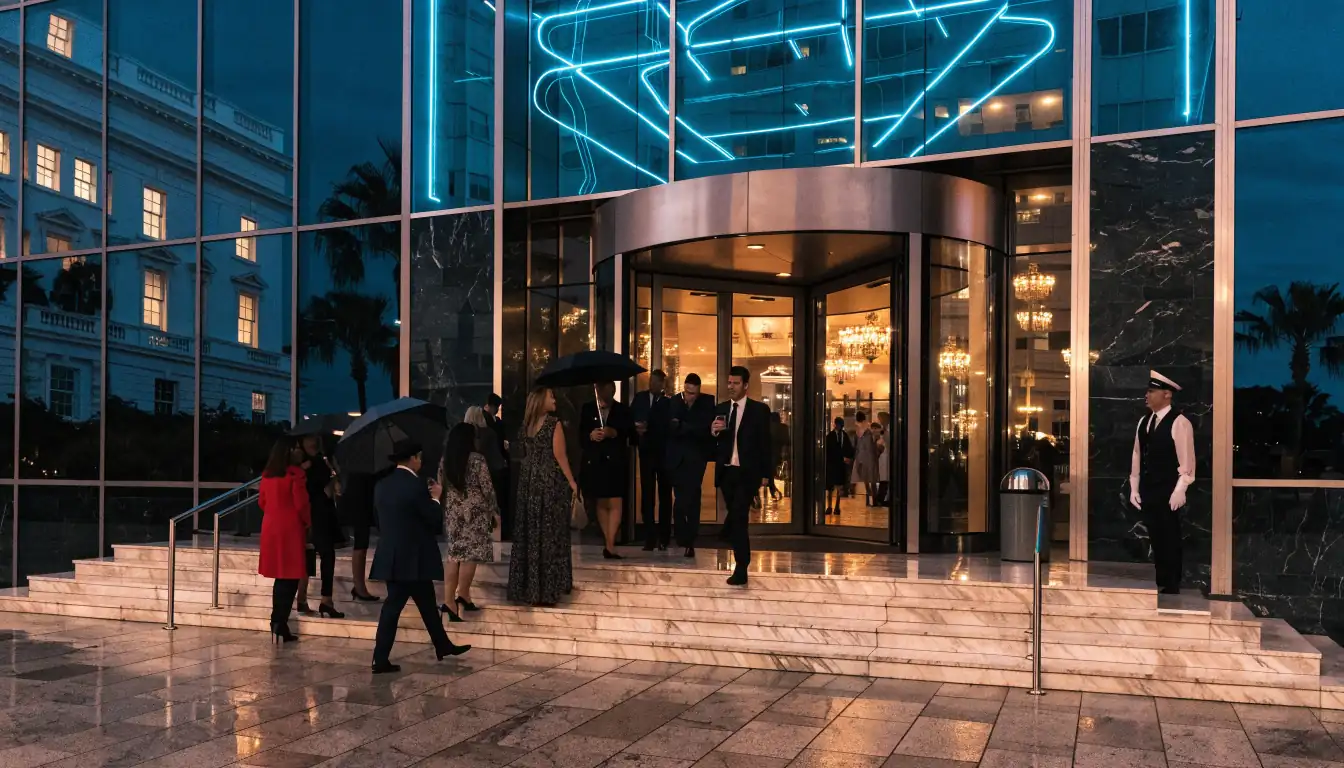
Before any of that matters, you need to actually get past the front desk. Minimum age for entry is 18, no exceptions, and you’ll need a valid photo ID to prove it — a driver’s licence or passport, checked at the door every time, regardless of how many times you’ve been in before. I’ve seen people turned away for forgetting their wallet at home, which is an annoying way to end a night before it starts. Bring it, keep it on you, and expect staff to ask again if you’re heading to a different area of the venue later in the evening.
No ID, No entry
If you arrive without a valid photo ID, you will be turned away at the door and lose your chance to play.

Worth remembering too: casinos in Australia are regulated at the state and territory level, not nationally, so the rules you might be used to from a casino interstate — opening policies, ID checks, how the floor is run — aren’t guaranteed to match exactly here. Tasmania runs its own show. It’s a small detail, but it explains why some habits you’ve picked up elsewhere don’t automatically carry over.
The honest take
If poker is the whole reason for your visit, manage your expectations and check ahead. If it’s one part of a bigger night that includes the bar, the pokies, and maybe a table game or two, it slots in fine. Just don’t expect the scale of a major interstate resort.
Small room. Real games. Bring your ID.
Where to Stay Near Hobart Casino
I used to book whatever hotel showed up first with the casino’s name in it, figuring that was the smart move. It isn’t, always. Staying inside a casino complex is convenient, sure, but it also means you wake up thirty seconds from a gaming floor, which isn’t what everyone wants after a long night at the tables. So before you lock in the on-site hotel (that’s a separate section, and worth reading), it’s worth knowing what else sits around Hobart if you’d rather have some distance between your pillow and the pokies.
Mid‑range chains and boutique hotels a short walk from the casino, often cheaper than on‑site rooms.
Self‑contained units with kitchens and laundry, ideal for stays of several nights.
Basic accommodation with essential amenities, perfect for short stays focused on gambling.
Australia has roughly 200 listed casinos spread across 146 cities, and in most of those cities the accommodation scene splits into two camps: rooms built into the casino itself, and everything else within walking or short driving distance. Hobart is no different. The "everything else" category is bigger than people expect, and it’s where you’ll find more variety in price and style.
Independent hotels and apartments nearby
If you want to gamble but not necessarily sleep where you gamble, look at the independent hotels scattered through the surrounding streets. These range from mid-range chain hotels to smaller boutique places, and a fair few offer self-contained apartments with a kitchen, which matters if you’re staying more than a night or two and don’t want every meal charged at resort prices. I’ve done both — stayed on-site and stayed a short drive away — and the independent options usually work out cheaper per night, though you lose the walk-back-to-your-room convenience after a session at the tables.
Serviced apartments
Serviced apartments near the casino tend to get overlooked because they don’t market themselves as "casino accommodation," but they’re often the better deal for anyone staying a few days. You get laundry, a proper kitchen, and usually more space than a standard hotel room. Worth checking if you’re travelling with others and want to split a booking rather than pay for two separate rooms.
Budget and short-stay options
Not every trip needs a view or a mini-bar. Hobart has budget motels and short-stay guesthouses within easy reach of the casino precinct that do the job — clean bed, hot shower, parking out front. If your plan is to gamble in the evening and sleep during the day, you don’t need to pay for extras you’ll never use.
What to check before booking
A few things I now check every time, after getting caught out once or twice:
- Distance to the casino entrance — “nearby” on a booking site can mean a genuine walk or a taxi ride. Check the map, not just the description.
- Check-in age and ID requirements — remember the minimum age for casino entry in Australia is 18, and every casino will ask for valid photo ID at the door regardless of where you’re staying.
- Cancellation terms — plans change, especially if you’re timing a trip around a tournament or a specific night.
- Parking availability — some independent hotels charge separately for parking, others include it. Ask before you arrive, not after.
On-site versus off-site, honestly
The three major operators that dominate Australia’s casino market tend to run their own accommodation as part of the package deal, and there’s a reason for that — it keeps you close, keeps you spending, keeps you on-site. Nothing wrong with that if it suits you. But if you’re the type who wants to step away from the noise at the end of the night, staying a few streets over gives you that option without losing easy access the next day.
My own rule now: first trip, stay on-site and see what the fuss is about. After that, decide based on how you actually spend your time there, not on what looked easiest to book.
Casino‑Attached Hotels in Hobart
Here’s the thing nobody tells you before you book: staying inside the casino complex and staying "near" it are two completely different experiences. I learned that the expensive way, dragging a suitcase four blocks in the rain because I’d booked something that called itself "casino-adjacent" and turned out to be neither adjacent nor particularly close to anything.
A hotel attached to a casino means you walk out of a lift and you’re on the gaming floor. No street crossing, no taxi at 2am, no standing outside in whatever Hobart’s weather is doing that night. That convenience is the whole pitch, and it’s a real one — but it comes with trade-offs worth knowing before you commit your card details.
What "attached" actually gets you
Rooms in a casino-integrated hotel are usually built around the idea that you’ll spend time downstairs, not in the room. That means:
Room types at Hobart casino
- Standard rooms – functional and closest to the gaming floor, cheapest option.
- Higher‑floor / view rooms – quieter, better views, slightly higher price.
- Suites – premium accommodation linked to loyalty tiers, often offered as a perk.
- Direct lift access to the gaming floor, often with a dedicated entrance separate from the public one
- Room service hours that stretch later than most standalone hotels bother with, because the building itself doesn’t sleep
- Package deals that bundle the room with gaming credits or show tickets — read the terms on these carefully, “complimentary” rarely means free of conditions
- Soundproofing that varies wildly depending on how close your floor sits to the entertainment areas
Compare that to somewhere like Crown Entertainment Complex, which runs 221,656 sq ft of gaming space with 2,500 gaming machines and 500 table and poker games under one roof — an operation at that scale needs hotel rooms designed as an extension of the floor, not a retreat from it. Burswood International Resort Hotel & Casino works on a similar logic, with 111,471 sq ft of gaming space, 3,779 gaming machines and 201 table and poker games attached directly to its accommodation wings. Conrad Treasury Casino, smaller at 67,788 sq ft with 1,300 gaming machines and 80 table and poker games, still follows the same pattern — the hotel exists because the casino does, not the other way around.
Room types worth asking about
Casino-attached properties generally split rooms into a few tiers:
- Standard rooms — functional, closest to the noise, cheapest option and fine if you’re only sleeping there between sessions.
- Higher-floor or “view” rooms — quieter, priced for the quiet as much as the view.
- Suites tied to loyalty tiers — these often aren’t bookable outright; you get offered them based on play, which is its own conversation for the loyalty section later.
I’ve stayed in a standard room directly above a gaming floor once. Slept fine. Slept fine because I was exhausted, not because it was silent.
Independent hotels nearby: what you trade
A separate hotel a short walk from the complex won’t have the direct-access lift, but you’ll generally get a quieter room, more predictable pricing without gaming packages muddying the rate, and staff who aren’t juggling casino guest priorities alongside yours. If you’re visiting for the tables or the machines specifically, the attached option saves you the walk. If you’re visiting Hobart and the casino is one stop among several, an independent hotel usually serves you better.
Before booking either, check what "casino hotel" actually means on the listing — some properties borrow the branding without being physically connected. Ask directly if the lift goes to the gaming floor. If the answer’s vague, that’s your answer.
Parking and Getting to Hobart Casino
I’ll be honest, the first time I drove up looking for a casino in Hobart, I circled the block twice because I was expecting something the size of Crown in Melbourne and instead found a much more modest, walkable setup. That’s the thing worth knowing before you go: Tasmania’s biggest venue reads more like a hotel with a gaming floor attached than a sprawling entertainment precinct, and getting there and parking near it is a lot less stressful than in the mainland cities.
Parking is free for guests staying at the casino hotel or dining on‑site; otherwise, the main lot may fill up and overflow street parking is limited.
If you’re driving in, there’s onsite parking available for guests, and it’s free if you’re staying at the attached hotel or dining there — worth checking when you book, because policies around validation can change and the person at the boom gate is the one who actually knows on the day, not whatever’s printed somewhere online. If the main lot is full, which does happen on weekend nights, there’s overflow street parking nearby, though Hobart’s council does enforce time limits in that area, so don’t assume you can leave the car there until 3am without a ticket waiting for you.
Getting there without a car
Hobart’s public transport isn’t going to win awards, but it gets you close enough. Metro Tasmania buses run routes that stop within a short walk of the casino, and if you’re already in the city centre, a taxi or rideshare is a five-to-ten-minute trip depending on traffic, which in Hobart terms means basically no traffic at all compared to Sydney or Melbourne. I’ve done the walk myself along the waterfront when the weather cooperated — it’s flat, it’s scenic, and it takes the edge off before you’ve even sat down at a table.
Why navigating here is different
Most tourist attractions in Hobart cluster around the waterfront, Salamanca, or up towards Mount Wellington, and the signage and foot traffic reflect that. The casino sits slightly apart from that main tourist flow, so your GPS will get you there fine, but don’t expect the same density of "you’re getting close" landmarks you’d see heading into Salamanca Market. Locals just say the name of the venue and everyone nods — it’s a known fixture, not something you stumble on by accident.
What to bring
Australia’s casino industry is regulated at state and territory level, and Tasmania’s rules mirror the national baseline on entry: you need to be 18 or over, no exceptions, and every casino in the country requires a valid photo ID before you’re let onto the gaming floor. Doesn’t matter how the parking or the drive went — if you show up without ID, you’re turning straight back around. I’ve seen it happen to a guy who left his wallet in a hotel room a five-minute walk away. He was not thrilled about the return trip.
A quick practical list before you head out:
- Confirm whether your visit qualifies for free onsite parking (dining or staying often does)
- Have government-issued photo ID on you, not a photo of it on your phone
- If relying on public transport, check Metro Tasmania’s current timetable rather than an old screenshot
- Budget a short walk if you’re coming from the main waterfront tourist strip
None of this is complicated. It’s just Hobart — smaller scale, less traffic, and a venue that doesn’t demand the logistics planning a big-city casino trip usually does.
Contact Details and Customer Service
First time I called a casino to ask a simple question, I expected the same runaround you get from a tourism hotline: a menu of options, hold music, someone reading off a script who’s never set foot in the building. That’s not what you get here, and it’s worth explaining why before you dial anything.
Because Australia’s casino industry is regulated at state and territory level, the property you’re calling operates under a specific gaming licence tied to Tasmania, not some generic national standard. That matters for something as basic as a phone call. The staff answering enquiries aren’t a call centre reading from a national tourism script — they’re tied to the specific licence conditions of that venue, which means they can actually tell you what’s running that night, whether a table’s full, or what ID you’ll need at the door. A tourism hotline can’t do that. It doesn’t know your local floor.
What to expect when you call
If you’re after table availability, dress code, or whether a particular game is running that evening, calling ahead beats guessing. I learned that the hard way once, turning up on a night when half the tables were closed for a private function. Nobody at a general enquiry line would’ve known to warn me — the venue’s own reception did, when I finally called them directly the next time.
For anything involving money — deposit limits, self-exclusion, account questions — you’re better off emailing than calling, simply because you want a written record. Ask for confirmation in writing. If a staff member tells you something about entry conditions or age verification over the phone, get it repeated in an email before you rely on it.
Email and written enquiries
Written enquiries work best for anything that needs a paper trail: complaints, accessibility requests, or questions about entry requirements. Keep in mind that under the Interactive Gambling Act 2001, the casino’s contact channels only relate to their physical, on-site operations — nobody there is going to email you a login for online play, and if anyone claiming to represent the venue does, that’s a red flag, not a bonus.
Why this isn’t like a tourism enquiry
A tourist information line will happily tell you about three different attractions in one call because none of them are regulated the same way. A casino can’t do that. Every answer you get — about entry, about a game, about a promotion — is bound by the licence conditions of that one venue. So don’t expect the same enquiry line to also field questions about ferry timetables or museum hours. It’s narrower than that, and honestly, that’s the point. You’re talking to people who know one building and its rules, not a switchboard for the whole city.
If you want to check anything before you go — is a table game running, is the dress code enforced that night, what ID you’ll need — ring the venue itself rather than a general Hobart enquiry number. You’ll get a straighter answer.
For anything related to Aussie Jack itself, including corrections or questions about what’s written here, reach out at [email protected].
Buffet Options, Jobs and Rewards at Hobart Casino
I went looking for a buffet breakfast the same way I go looking for most things — assuming the "unlimited" sign meant unlimited and the photos on the website meant anything at all. Casino breakfast spreads are one of those things that get talked up online more than they get described. So let’s actually talk about the three parts people ask about together, because they’re connected in a way that isn’t obvious until you’ve worked or eaten at one of these places.
The breakfast buffet question
If you’re searching for a casino resort with a proper breakfast buffet, understand that what’s on offer at any given venue changes with renovations, management contracts and whoever’s running food and beverage that season. I’m not going to invent a spread that might not exist by the time you read this. What I will say is this: check the actual dining section for the venue before you plan a morning around it, because "buffet" gets used loosely — sometimes it means a full spread, sometimes it means a continental setup with a hot station bolted on. Ask at the front desk or call ahead. That’s the only way to get a straight answer instead of a marketing photo.
Jobs at the casino
This is the bit people underestimate. Casino resorts are some of the biggest employers in their region — floor staff, kitchen, security, cage, hospitality, maintenance, the lot. If you’re chasing a job at a casino, the industry itself has been through a rough few years, and it’s worth knowing that before you walk in with expectations. Crown Resorts paid AU$450 million in penalties to AUSTRAC after its compliance failures came to light, which tells you the scale these operators work at — and the scale of scrutiny they’re now under. Star Entertainment is in a similar position, carrying an outstanding AUSTRAC fine expected to exceed AU$400 million, and only stayed on its feet after Bally’s Corporation stepped in with a rescue package in early 2025.
None of that is a reason to avoid applying. It’s a reason to check who you’d actually be working for. A casino under financial strain or heavy regulatory watch tends to run leaner, and roles can shift or disappear faster than you’d expect at a business with steadier footing. Ask about the parent company during any interview. It matters more than the job ad lets on.
Loyalty programmes — read the fine print
Every casino runs some version of a rewards card: points on play, comp meals, the occasional free room night. I’ve had a few. They’re fine as far as they go, but they’re not free money — they’re a discount on money you were going to spend anyway, dressed up as a gift. The card isn’t the promotion. The promotion is getting you to play longer.
A rewards programme is worth signing up for if you’re already there and already spending — never a reason to go somewhere you weren’t planning to. And if a card, an app, or a friend’s referral link promises you something extra for opening an account, that’s not a reward, that’s an inducement, and it’s not something a licensed Australian operator can legally dangle in front of you anyway.
Loyalty programmes reward regular play with comps and discounts, turning your usual spend into extra perks.
Rubbed the wrong way once, learned it fast.
Opening Hours and Recent Developments
I’ve called ahead to casinos before, asked "so you’re definitely open tonight?", and still got there to find some function had taken over half the gaming floor. So I get why people search for reopening dates and current schedules before driving out. Nobody wants to waste a night.
Here’s the honest answer for anyone trying to plan a trip to Hobart specifically: there isn’t a separate, licensed casino operating under a "Hobart casino" name the way there’s a single licensed venue in South Australia, where SkyCity Adelaide holds the only casino licence in the state. Tasmania’s gaming venues don’t work the same way as that one-operator model, and that’s a genuine structural difference, not just a naming quirk.
That matters for opening hours too. Because Australia’s casino industry is regulated at the state and territory level, every jurisdiction sets its own rules for trading hours, floor changes and licence conditions. What applies in Adelaide, Perth or the Gold Coast doesn’t automatically apply to a Tasmanian venue. If you’re used to a mainland casino’s routine — set hours, predictable calendar of promotions — don’t assume the same pattern holds here. Check the specific venue’s posted hours rather than going off what you remember from another state.
Why "recent developments" is a moving target
With roughly 200 listed casinos spread across 146 cities in the country, renovation cycles, ownership changes and schedule tweaks are happening somewhere in Australia constantly. Some of that noise ends up in searches about "reopening" even when the venue never actually closed — a refurbished gaming floor, a new entrance, a temporary reduction in table games during works. It’s rarely the dramatic shutdown-and-relaunch story the phrase implies.
Check Hours
Always confirm the casino’s current opening hours directly with the venue before you travel.
What I’d actually do before treating any "reopening" claim as current:
- Confirm the operating hours directly with the venue rather than trusting an old listing.
- Ask specifically if any section of the gaming space is closed for works — it changes the experience more than people expect.
- Check whether ID requirements or entry conditions have changed, since these can shift with licence reviews at state level.
None of this is exciting advice. It’s just the difference between showing up to a working floor and showing up to scaffolding.
What to watch for going forward

Because oversight sits with state and territory regulators rather than one national body, updates to hours or floor layout tend to get announced locally first — venue websites, local licensing notices — before they show up anywhere else. If you want current information, that’s genuinely the first place to look, not a general casino guide, and not this one either. Treat anything you read about a specific reopening date as provisional until the venue itself confirms it.
Spa and Wellness Facilities
I’ll be honest — the first time someone told me there was a spa attached to a casino, I assumed it was a room with a massage chair and a candle for the photos. That’s not what you get here, but it’s also not the main event, and it shouldn’t be treated like one when you’re deciding whether to visit.
The spa is an add‑on for guests already on the casino floor, not a standalone destination.
The wellness side of the venue exists for people staying overnight or spending a full day around the gaming floor, not for people who came specifically to book a facial. If you’ve read the section on casino-attached hotels, you’ll know the rooms are built around convenience for guests who are here to gamble, eat, and sleep without leaving the building. The spa fits the same logic: it’s there so you don’t have to leave the complex to unwind between sessions at the tables or the pokies.
What that means in practice is fairly simple. You get treatment rooms, some kind of relaxation lounge, and staff who are used to a mixed crowd — people coming straight off a poker session at odd hours, tourists booking something mid-afternoon, locals treating it as a night out add-on rather than a destination in itself. Don’t expect the pacing of a resort spa where everything is scheduled around your day. Here the spa works around the casino’s rhythm, not the other way round.
I’d also say: don’t confuse "wellness facilities" with "quiet." A gaming venue is built for noise and movement, and even the calmer corners carry some of that energy. If total silence is what you’re after, you’re better off at one of the independent hotels nearby rather than anything inside the complex itself.
One practical thing worth knowing before you book anything — dress code. The gaming floor has its own expectations around neat, presentable clothing, and that carries over loosely into shared spaces like bars and lounges near the spa. Nobody’s going to hand you a blazer at the door, but thongs and singlets won’t get you far past reception in the evening.
If you’re weighing up whether the spa is a reason to visit on its own — it isn’t. It’s a decent add-on if you’re already staying, already gambling, or already killing time before a show or dinner booking elsewhere in the building. Treat it as a break from the floor, not a replacement for one.
Worth it for an hour between sessions. Not worth planning a trip around.
Dining: Restaurants Inside the Casino
Every big casino I’ve been to sells itself on the same line: "world-class dining." Half the time that means a burger joint with mood lighting. So when people ask me about restaurant options at a casino in Hobart, I try to actually separate what’s a proper sit-down concept from what’s just a bar snack menu with a fancy name.
Australia doesn’t have one casino template you can assume applies everywhere. The industry is regulated state by state, and with 200 listed casinos spread across 146 cities, the gap between a small regional venue and a full resort complex is enormous. That matters for dining specifically, because a venue’s restaurant lineup usually scales with its gaming footprint. Crown Entertainment Complex, for comparison, runs 221,656 sq ft of gaming space with 2,500 gaming machines and 500 table and poker games — that’s the kind of scale that supports half a dozen distinct restaurant concepts under one roof, from fine dining to casual Asian to steak houses. A smaller casino simply doesn’t have the floor traffic to justify that many kitchens running at once.
What you want to check before you build an evening around "dinner at the casino":
- How many separate kitchens are actually running, not just how many bars pour drinks near a gaming floor.
- Whether the fine-dining option requires a booking, because on a busy night the casual venues fill the gap fast.
- If there’s an actual view or rooftop element, or if “rooftop bar” just means outdoor seating on a low podium level.
I’ve walked into more than one venue expecting a proper restaurant floor and found a single carvery counter dressed up as three. Not a disaster, just not what the brochure implied. The honest way to judge it is to ask what’s cooked to order versus what’s sitting under a heat lamp.
None of this dining variety changes the age or ID rules — you still need to be 18 and carry a valid photo ID to be on the gaming floor at all, restaurant or not, and that applies whether you’re there for the food or the tables.

For anyone weighing a casino restaurant against something a few blocks away in town, the real difference isn’t the food quality, which can go either way. It’s convenience: no walking outside after a big meal, no separate booking system, and — if the venue is large enough — a genuine choice of cuisines without leaving the building. Small print aside, that’s the actual selling point.
Food Courts and Pool Areas
Not every visit needs a sit-down meal, and this is where a food court earns its keep. Quick counters, faster service, prices that don’t ask you to commit to a whole evening — that’s the appeal after a few hours at the tables. You grab something, eat, get back to whatever you were doing. No fuss.
I’ll be honest, when people search for a casino pool in Tasmania, they’re usually thinking of somewhere like Burswood in Perth, which pairs its gaming floor with resort-style extras. That property runs a genuinely large operation — over 111,000 sq ft of gaming space, close to 3,800 gaming machines and 201 table and poker games. A setup that size can justify a pool and a food court sitting right next to the action, because there’s enough foot traffic to support both.
Whether a Hobart venue offers the same combination is a different question, and it’s worth checking directly with the property rather than assuming. Not every casino building doubles as a resort. Some are strictly gaming and dining, no pool deck attached.
Bottom line: if a swim or a casual snack matters to your plans, confirm it before you go. Ring ahead. Saves a wasted trip.
Should I stay at the casino’s hotel?
Not necessarily — staying on-site is convenient but puts you right next to the gaming floor. Plenty of independent hotels and self-contained apartments sit within walking or short driving distance and often work out cheaper, especially for longer stays.
What does the IGA actually prohibit?
The Interactive Gambling Act 2001 stops businesses from offering online casino-style services like roulette, blackjack, baccarat, virtual table games and many online pokies to Australian residents. Sports and racing betting are still allowed if offered by a licensed Australian wagering operator following the rules.
What age do you need to be to participate in online gambling in Australia?
You need to be 18. This is also the minimum age enforced at physical casinos, where staff check a valid photo ID such as a driver’s licence or passport at the door.
What is ACMA?
ACMA is the regulator with power to order internet service providers to block domains offering prohibited gambling services to Australian users, enforcing the restrictions set out in the Interactive Gambling Act.
What state laws also apply?
Casinos in Australia are regulated at the state and territory level rather than nationally, so rules on things like opening policies, ID checks and floor operations can differ from one place to another — Tasmania runs its own system separate from other states.