
Best Pokies in Geelong: What Actually Matters

With so many gaming venues and online options competing for your attention, it helps to see how different operators stack up before you decide where to play.
Thor Casino is an online casino brand that features in discussions of gaming options for players looking beyond traditional venues.
Betvictor is a well-known betting and gaming operator with a presence across multiple markets, offering a range of wagering and casino products.
Tabcorp is a major, long-established gaming and wagering company with a significant footprint in the Australian market.
Vegaz Casino is an online casino option that appears among operators catering to players seeking slot and table game variety.
Jeetcity Casino is an online gaming platform offering a range of casino entertainment for interested players.
JustCasino is a straightforward online casino brand aimed at players looking for accessible gaming options.
WinSpirit Casino is an online casino operator providing a selection of gaming products to its player base.
Betfair is a globally recognised betting exchange and gaming brand known for its wide-reaching sports and wagering platform.
CasinoStars is an online casino brand offering a variety of gaming content for players exploring their options.
Lucky Dreams is an online casino designed for players seeking a broad range of slot and casino game experiences.
Finding the Best Pokies in Geelong: Key Factors to Consider
I moved to Geelong for work, not for the gaming rooms, but you notice things when you’re walking home past the same pub three nights a week. Fifteen years ago I would have told you all gaming machines are basically the same wherever you find them. That’s wrong, and it took me a stretch of losing money in the wrong venues to figure out why.
The short version: where you play in Geelong matters almost as much as whether you play at all. Venue, timing, and the rules sitting quietly in the background all change what actually happens to your money. None of that gets explained on the machine itself. You have to know it going in.
Why "best" doesn’t mean the same thing to every player
Before getting into specifics, it’s worth being honest about what people actually mean when they type something like "best pokies in Geelong" into a search bar. I’ve asked mates about this and gotten three different answers:
Venue that is nearest to your residence and open when you finish a night shift.
Place where you can stay for an hour without constant table service interruptions.
Location that hosts a particular machine you liked elsewhere and want to find again.
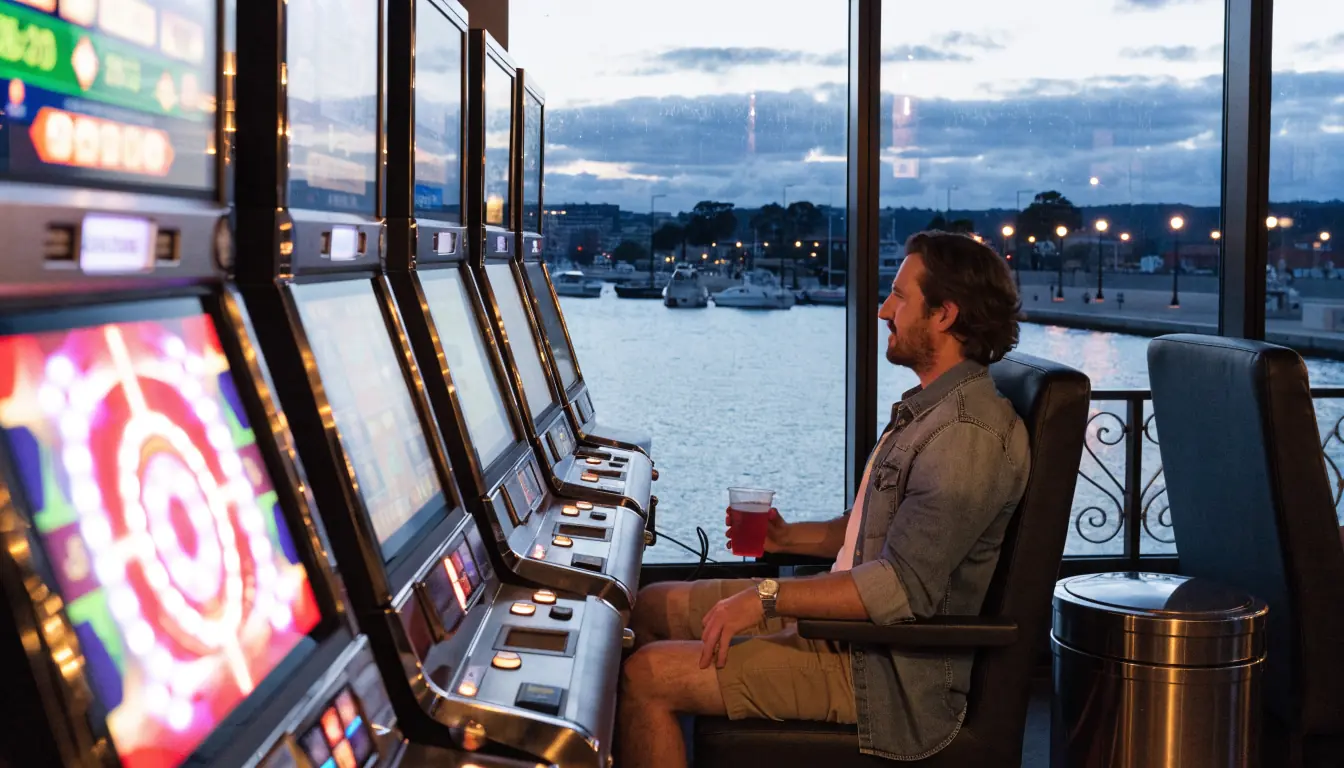
- Some want the venue closest to home that’s open when they finish a night shift.
- Some want somewhere they can sit for an hour without table service hassling them every five minutes.
- Some are chasing a specific machine they liked at a mate’s local and want to know where else it’s installed.
None of those definitions has anything to do with which venue is "generous" or "loose" — terms you’ll hear thrown around by blokes who’ve clearly never read a regulatory document in their life. What actually separates a decent gaming room in Geelong from a mediocre one comes down to three unglamorous things: where it sits in the layout of the city, when its doors are actually open (not what the sign says), and what regulatory framework it’s operating under. That last one sounds boring. It isn’t. It’s the thing that decides how much money you’re legally allowed to load into a machine in one sitting.
Location: it’s not just about being close to your house
Geelong isn’t a small town anymore, but it’s not Melbourne either. Venues cluster in a few predictable spots — around the city centre, along the bay-side strip, out toward the newer suburban developments, and scattered through the older pub-heavy areas that have had gaming licenses for decades. Each of those clusters has a slightly different feel, and it’s worth understanding why before you pick a regular spot.
City-centre venues tend to be busier on weekend nights, which some players like — more atmosphere, more turnover on machines, shorter walks to get a meal or a drink between sessions. The trade-off is noise and crowding, and on a Saturday night you might be waiting for a seat at a machine you actually want.
Suburban club venues, the ones attached to bowls clubs, RSLs, or football clubs, run at a different pace entirely. Quieter through the week, predictable regulars, staff who know your face after a few visits. I ended up preferring these not because the machines paid differently — they don’t, the rules are the same regardless of venue type — but because I could actually think while I played instead of getting jostled every time someone walked past with a tray of drinks.
Then there’s the stuff further out, toward places like Apollo Bay and the coastal strip, where gaming rooms exist more as an add-on to a pub that’s really there for the tourist trade. These aren’t destination venues for serious players. They’re fine if you’re passing through and want to kill twenty minutes, but nobody’s driving forty minutes for the gaming room specifically.
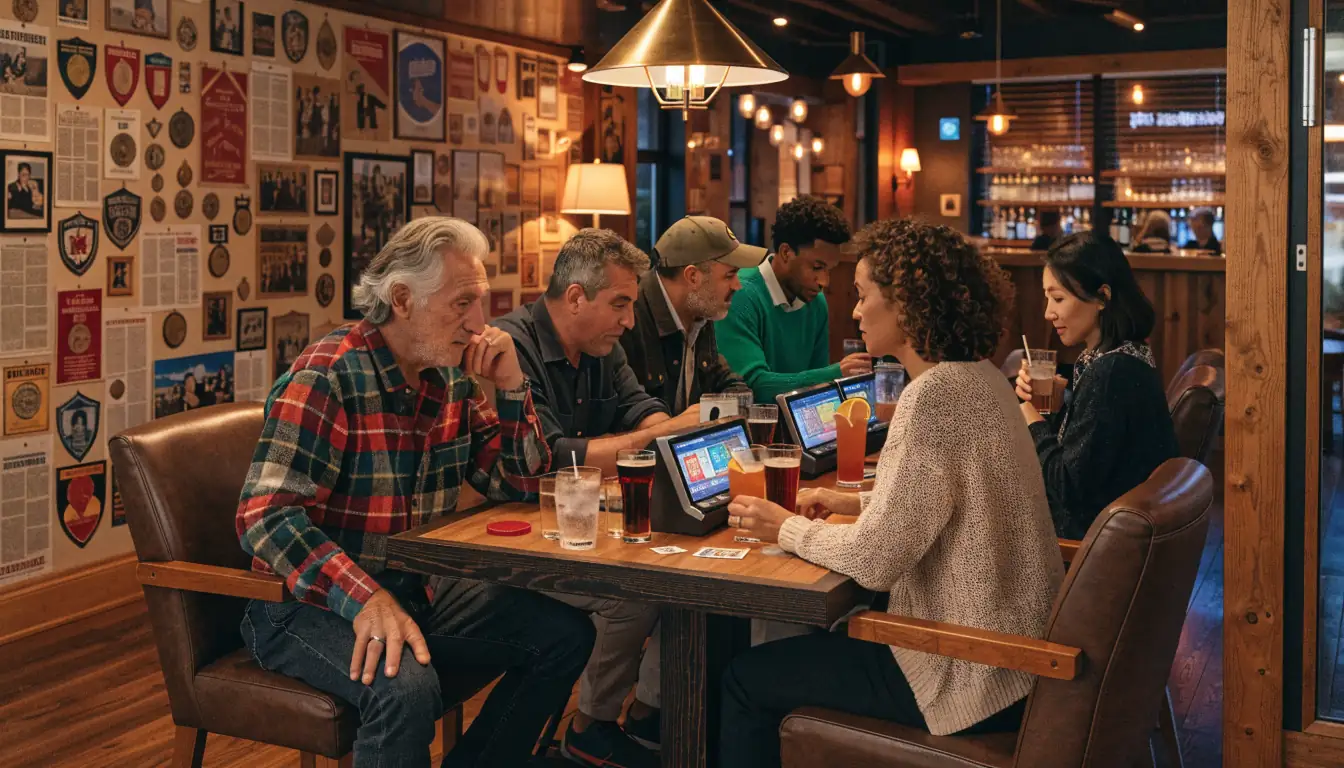
If you’re trying to work out which venue actually deserves your time, the honest answer is: visit more than one before deciding. The machine selection, the general vibe, whether the smoking area is functional in winter — these are things you learn by showing up, not by reading a list somewhere. What you can research ahead of time, though, is the regulatory side, because that part doesn’t change venue to venue. It’s set at the state level and applies the same whether you’re in a flashy city bar or a quiet suburban club.
Operating hours: what "open now" actually means in practice

This is where a lot of confusion comes from, and I say that as someone who once drove across town at 1am because I assumed a venue I liked was open around the clock. It wasn’t. I sat in the car park for ten minutes trying to work out if I’d misread something before giving up and going home.
Here’s the reality: not every venue with gaming machines in Geelong runs on a 24-hour basis, and the ones that do aren’t necessarily running their gaming room the whole time even if the bar technically never closes. Licensing conditions, local council rules, and each individual operator’s own commercial decisions all factor in. A club might have a liquor license that allows late trading but choose to shut the gaming floor earlier because staffing overnight isn’t worth it for them. A pub near the CBD might run later on Friday and Saturday specifically because that’s when the foot traffic justifies it, then close the gaming room at a much more modest hour on a Tuesday.
So when people ask where to find something open right now, at whatever hour they happen to be asking, the honest answer is: it depends entirely on the day of the week and the specific venue, and there’s no shortcut around actually checking. I got burned enough times assuming a place was open that I now just accept I have to confirm it, every time, no exceptions. Ringing ahead sounds old-fashioned. It saves you a wasted trip.
What I can tell you with more confidence is the pattern, if not the precise hours of any one venue:
Don’t assume open
Assuming a venue is open can waste your time and money; always check the current hours before you head out.
- Inner-city and CBD-adjacent venues are more likely to run later, particularly toward the end of the week, because they’re built around a broader night-out crowd rather than gaming specifically.
- Suburban club venues tend to follow tighter, more predictable hours tied to their broader club operations — closing when the bistro and bar wind down rather than running independently late.
- Smaller pub venues, especially further from the centre, are the least predictable and the most likely to have shortened hours on quiet weeknights regardless of what’s posted.
None of this is a criticism of any particular venue. Staffing a gaming room overnight costs money, and operators make commercial calls about whether that’s worth it on a Wednesday versus a Saturday. It’s just something you need to factor in rather than assume.
The regulatory backdrop nobody explains properly
This is the part that actually matters most, and it’s the part almost nobody bothers to walk through properly, because it’s less exciting than talking about machines or venues. But if you understand this, you understand why Geelong’s gaming rooms behave the way they do, and why some of the "rules" you’ll notice — the way staff ask certain questions, the caps on what you can load into a machine, the changes coming to how you’re identified at the machine — aren’t random. They’re the result of a regulatory system that’s more fragmented than most people realise.
Australia doesn’t have one national gambling law or a single national regulator sitting over everything. Instead, regulation is split between the states and territories on one side, and the federal government on the other, each covering different parts of the picture. Gaming machines specifically — the kind you find sitting in a Geelong pub or club — are regulated at the state level, and Victoria has its own set of rules that are separate from what applies in New South Wales, Queensland, or anywhere else. That’s the reason the terms and conditions you notice at a Geelong venue won’t always match what a mate describes from a trip interstate. It’s not inconsistency for its own sake — it’s the product of each state building its own framework independently, sometimes over decades.
A bit of history helps explain how we got here. New South Wales was the first Australian state to legalise poker machines, back in 1956. Every other state’s framework, including Victoria’s, developed later and separately, which is a big part of why the rules still don’t line up neatly across borders nearly seventy years on. When someone tells you a machine somewhere else in Australia "works differently," they’re often technically right — just not for the reason they think. It’s not that the machines themselves are built differently in some mysterious way; it’s that the state framework governing how they’re allowed to operate is different.
For Geelong specifically, since it’s a Victorian city, the rules that apply are Victoria’s rules. And Victoria has been tightening those rules in ways that directly affect what you’ll experience walking into a gaming room in the city right now and into next year.
The loss-limit and cash-load rules already in place
One thing that surprised me when I first learned about it — because nobody explains this at the venue, you just start noticing the machine behaving a certain way — is that Victoria sets a default loss limit over a rolling 24-hour period, and it’s set at $50 unless a player actively adjusts it. There’s also a cap on how much cash you can load into a machine in a single session, set at $100. These aren’t venue-specific quirks. They’re state-wide defaults built into how the machines operate in Victoria, which means they apply the same way whether you’re playing in the busiest bar in central Geelong or the quietest club out toward the suburbs.

I’ll admit my first reaction to hitting that loss limit was annoyance — I remember standing there thinking the machine had glitched. It hadn’t. It was doing exactly what it’s designed to do under Victorian rules. Once I understood that, I stopped being annoyed and started treating it as useful information: it’s a built-in stopping point, whether you want one or not. You can adjust the default, but the fact that there’s a default at all tells you something about how the state treats these machines — as something to be actively managed, not left running open-ended.
What’s changing from December 2025
The bigger shift, and the one that’s actually relevant if you’re asking about "best" venues heading into 2026, is the move toward mandatory carded play. From 1 December 2025, Victoria will require it across the gaming machine sector. In plain terms, that means playing without some form of card-based identification tied to your session stops being an option — it becomes a requirement, not a feature some venues offer and others don’t.
Carded play from Dec 2025
From 1 December 2025 Victoria will require card‑based identification for every gaming session, so be prepared to use a player card at any venue.
For Geelong players specifically, this changes the practical experience of walking into a venue in a way that’s worth being upfront about, rather than something you discover mid-session and feel blindsided by. Where you might previously have sat down at a machine and started playing straight away, the process now involves that carded step as a standard part of every session, at every venue, because it’s a state requirement rather than a venue choice. That’s actually useful to know if you’re picking a "best" venue for yourself going into next year — the venues that get the transition smoothest, with staff who explain it clearly and systems that don’t create a queue at the card station, are going to feel noticeably better to walk into than the ones that treat it as an afterthought. I’d genuinely rather wait an extra thirty seconds at a card kiosk with a staff member who knows what they’re doing than deal with a confused system at a venue that hasn’t bothered to prepare properly.
It’s also worth being clear that this isn’t a Geelong-specific rule, or something local venues decided on their own — it’s a statewide Victorian requirement, which means every gaming room in the city, regardless of size or type, will be operating under it. There’s no venue you can find that will be exempt because it’s smaller, or older, or run differently. That uniformity is actually a small mercy: you won’t need to hunt for a venue that "still does it the old way," because that option won’t exist anywhere in the state.
Why the framework matters more than people think
I bring all this up not to turn a piece about finding good venues into a legal lecture, but because the regulatory environment is genuinely the invisible hand shaping everything else you’ll notice about a Geelong gaming room. The loss limits, the cash caps, the incoming card requirement — none of these are things a venue chooses to impose on you out of caution or house policy. They’re state-level rules that every licensed venue in Victoria has to build into how their machines operate. Understanding that helps you stop blaming or crediting individual venues for things that are actually happening at a state level, and start noticing the things that actually do vary by venue: how smoothly staff handle those state requirements, how comfortable the room is to sit in, whether the machine selection suits what you actually enjoy playing.
It also explains why comparing a Geelong venue to somewhere interstate rarely tells you anything useful. If a mate in another state describes a completely different loss-limit setup, or no carded-play requirement at all, that’s not the venue being more generous — it’s a different state framework entirely, built under its own separate history and its own separate legislation. Victoria’s rules are Victoria’s rules, and Geelong sits squarely inside them.
One more point worth making plainly: Australia’s lack of a single national gambling authority means there’s no one body you can check to get a definitive national answer about "the rules" for gaming machines. It’s genuinely split — states handle the machines themselves, and separate frameworks exist federally for other parts of the gambling landscape entirely (a subject that matters much more once you get into anything online, which isn’t what this section is about). For someone in Geelong asking what to expect at a local venue, the practical upshot is: the answer sits with Victoria’s specific rules, not some broader national standard, because that broader national standard for gaming machines simply doesn’t exist.
What COVID actually showed about these venues
There’s one period worth mentioning because it’s the clearest illustration of just how much a gaming room’s "openness" depends on forces well outside the venue’s own control. During the 2020 pandemic, every Australian venue with gaming machines was shut, nationwide, and usage dropped to nothing — not reduced, not scaled back, but genuinely zero, because the venues themselves weren’t operating. I remember walking past places I used to go and seeing the machines dark through the windows, chairs stacked, nothing running.
It’s an extreme example, obviously — nobody’s expecting a repeat of a global shutdown — but it’s a useful reminder that "open now" or "24-hour" claims about any venue are always conditional on a broader set of circumstances, public health being the most dramatic example but far from the only one. Venues close for renovations, for licensing reviews, for reasons that have nothing to do with demand. If you’re building a habit around a specific place, it’s worth having a backup rather than assuming any single venue’s doors will always be open exactly when you show up.
Comparing scale: why Geelong isn’t New South Wales
It’s tempting to size up how "big" the gaming scene in a place like Geelong is by comparing it to raw numbers from elsewhere, and this is where a lot of people get the wrong impression. New South Wales, as a state, has roughly 87,298 gaming machines spread across 2,195 venues — a scale that dwarfs almost anywhere else in the country. If you’ve ever heard someone say Australia has more gaming machines per person than almost anywhere in the world, NSW numbers are a big part of why that reputation exists.
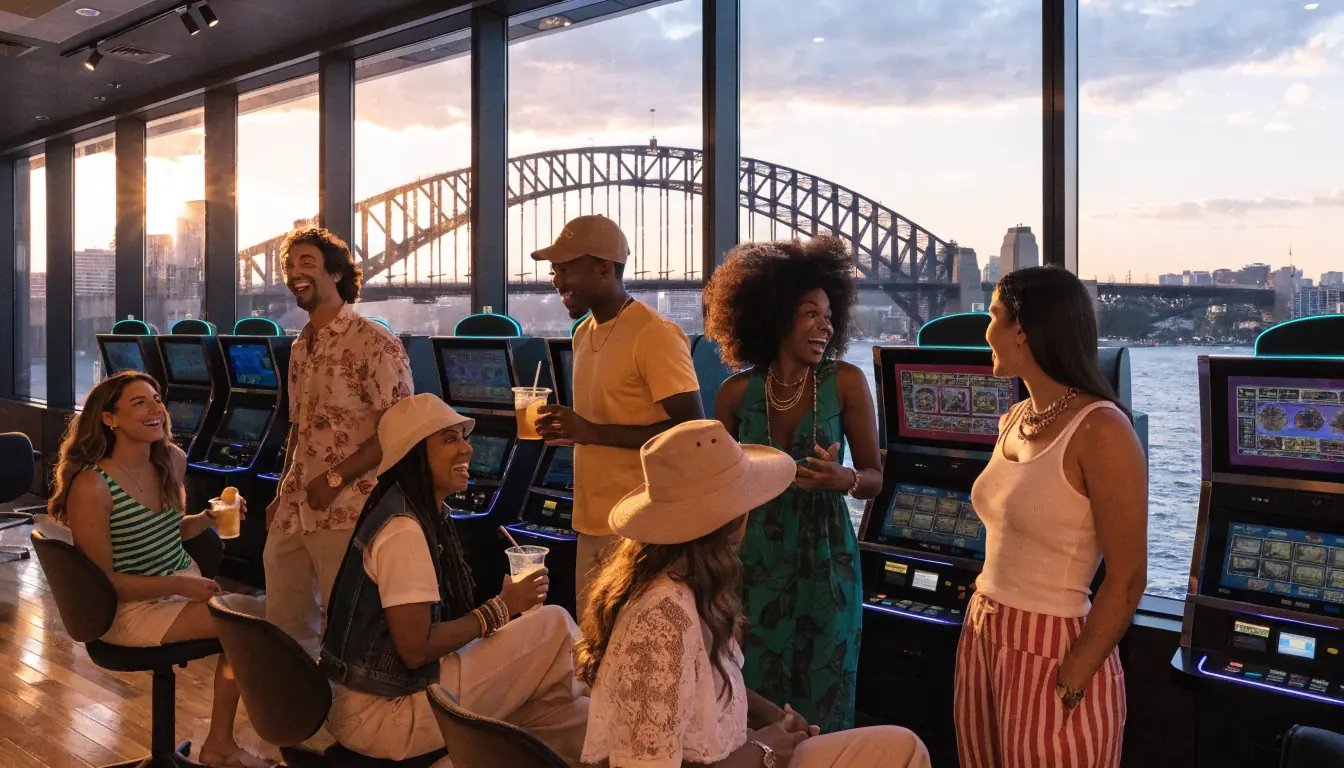
Geelong, sitting within Victoria rather than NSW, isn’t operating anywhere near that scale, and it shouldn’t be judged against it. Comparing the density of venues in a regional Victorian city to state-wide NSW totals is comparing two completely different things — a whole state’s cumulative figure against a single city’s local venue count. What actually matters for someone living in or visiting Geelong isn’t how the city stacks up against NSW’s enormous numbers; it’s whether there’s enough genuine variety locally to have a real choice of venues, hours, and atmospheres. And there is — Geelong has a reasonable spread of pubs and clubs offering gaming machines across its different areas, even if nobody’s claiming it rivals a capital city, let alone an entire other state.
I mention the NSW figures mainly because I’ve seen people get the comparison backwards — assuming because NSW has such an enormous number of venues and machines that somehow the rules or experience must be "better" there. Better isn’t really the right word. Different regulatory framework, different history — 1956 versus Victoria’s own separate legislative path — and a completely different scale of population and venues. None of that makes Victorian gaming rooms, or Geelong’s specifically, worse. It just makes them their own thing, operating under their own state’s specific approach rather than a bigger state’s approach.
Practical checklist before you commit to a venue
After enough trial and error, here’s roughly what I actually check now before treating somewhere as a regular spot, rather than a one-off visit:
Confirm the hours directly, don’t assume. A quick call or a check of the venue’s current posted hours beats guessing based on what a website said months ago or what a mate half-remembers. Hours shift, especially around quieter weeknights, and "24 hours" printed somewhere isn’t always the reality on the gaming floor specifically, even if the bar itself runs later.
Understand it’s the same state rules everywhere in Geelong. The default loss limit, the cash-load cap, and the incoming carded-play requirement apply across every licensed venue in Victoria — there’s no version of Geelong where a venue operates outside those settings. What differs venue to venue is how well they implement and explain them, not whether they apply.
Think about what kind of session you actually want. A busy city venue on a Saturday night suits people who want atmosphere and don’t mind waiting for a machine. A quieter suburban club suits people who want to sit, think, and not be interrupted. Neither is objectively better — it depends what you’re actually there for.
Venue selection checklist
- Confirm the venue’s operating hours directly.
- Understand that Victoria’s loss‑limit and cash‑load caps apply everywhere.
- Decide what kind of session you want – busy city night or quiet suburban club.
- Have a backup venue in case your first choice is closed.
- Remember that a busy venue isn’t necessarily more generous.
Have a backup venue in mind. Renovations, licensing reviews, staffing shortages, even genuine emergencies close venues without warning. Relying on exactly one spot means you’re stuck if that one spot isn’t running the day you show up.
Don’t mistake busyness for value. A packed venue tells you it’s popular, not that the machines are somehow more generous. The rules governing return rates and limits are set at the state level, not decided venue by venue based on how many people are in the room — a point that matters more once you start comparing what different venues and states actually offer, which is worth its own proper look rather than a side note here.
None of this is complicated once you’ve been through it a few times. It just isn’t explained anywhere obvious, and most people learn it the way I did — by driving to a closed venue, or getting confused by a loss-limit prompt they didn’t expect, or assuming a machine somewhere else must work differently because a mate said so. It doesn’t. It’s the framework underneath that’s different, and once you understand that framework, picking a venue in Geelong stops being guesswork and starts being a much shorter, much more sensible list of actual questions to ask before you walk in.
Geelong Pokies Payout Rates: What You Can Really Expect
Here’s what nobody explains at the venue: Victoria sets a minimum return rate of 85% on gaming machines, and that’s a floor, not a marketing figure. It’s the same rule that stops any Geelong pub or club taking bills over $50 into a machine – a small detail, but it tells you the state is watching how money moves through these things.
Cross the border into Queensland and the rule looks almost identical on paper – 85% minimum in pubs and clubs, 90% in casinos. So no, you’re not missing some secret high-payout venue two hours away.
What this actually means for you: the number on the machine’s certification sticker isn’t a promise of what you’ll walk out with tonight. It’s a long-run average, calculated over the machine’s whole life.
Same floor, different building. That’s it.
Online Casino Pokies for Geelong Players: Legal Landscape and Practical Tips
Let me save you the search: there is no legal Crown Geelong casino with online pokies waiting for you. Crown doesn’t operate in Geelong at all, online or off. If a site tells you otherwise, close the tab.
Illegal online sites
Playing on offshore online pokies is illegal for Australian residents and leaves you without consumer protection, exposing you to fraud and financial risk.
Here’s the part nobody selling you a "welcome package" wants spelled out. Under the Interactive Gambling Act 2001, it’s an offence for an operator to provide online casino games, slot machines or poker to Australian residents. Not a grey area, not a loophole — the law names casino-style pokies specifically. The penalties sit on the operator’s side: up to AU$360,000 a day for an individual running the show, and up to AU$1.8 million a day for a company. That’s why every legitimate operator you’ve heard of in Australia sticks to sports and racing wagering and stays well away from anything that looks like a slot reel.
So who’s actually offering "online pokies" to people searching from Geelong? Offshore sites, full stop. They sit outside Australian licensing, outside the Act’s reach for enforcement against players, and outside any obligation to run fair returns, honest self-exclusion, or a real complaints process. I spent a fair chunk of money finding that out — chasing a "high limit" table that turned out to be a UI number with no withdrawal path behind it. Learned that the hard way so you don’t have to.
What ACMA actually does about it
The Australian Communications and Media Authority has the power to order internet service providers to block illegal gambling sites. That’s a real, ongoing enforcement mechanism — not a toothless warning letter. It doesn’t mean every offshore site is blocked at any given moment, and it doesn’t mean a site still loading in your browser is fine to use. It means the industry is being chased, slowly, site by site.
Why the pitch keeps getting louder
The online gaming industry is worth billions of dollars globally and keeps growing at a pace that outruns any single regulator. That growth is exactly why the ads keep showing up in your feed no matter how many you block — there’s more money chasing Australian players every year, not less. More money chasing you doesn’t mean more legal options for you. It means more pressure, dressed up as opportunity.
If you’re set on playing anyway
A few things worth knowing before you type a card number into anything:
Offshore risks
Offshore operators are not regulated, so bonuses can be bait and payouts may be blocked, offering no legal recourse if something goes wrong.
- No deposit bonus offers on offshore sites aren’t proof of legitimacy — they’re a hook, same as any other marketing line. Read what’s behind the headline number, not the number itself.
- Real money play on an offshore platform means real money leaving the country with no Australian consumer protection following it.
- Self-exclusion tools run by Australian-licensed services don’t cover offshore casinos. If you sign up somewhere overseas, walking away later is on you, not on any system built to help.
- Payout claims — “maximum” anything — are marketing copy until you’ve actually requested a withdrawal and watched it clear. Don’t trust the number on the homepage.
None of this is a lecture on staying away entirely — that’s your call. It’s just what I wish someone had told me before I trusted a homepage over my own bank statement. Read the terms, not the banner. The banner’s job is to stop you reading anything else.
Will I get in trouble for playing at an offshore casino?
No, Australian residents who deposit at offshore casinos face no criminal exposure — the Interactive Gambling Act targets the operators who provide these services, not the players using them.
What responsible gambling tools do Australian casinos offer?
You can register with BetStop, the National Self-Exclusion Register, which has been running nationwide since August 2023, though it only binds licensed wagering providers and doesn’t cover offshore casinos. In Victoria, venues also apply a default 24-hour loss limit and a cap on cash loaded per session, with mandatory carded play coming from 1 December 2025.
What does the IGA actually prohibit?
The Interactive Gambling Act 2001 makes it an offence for an operator to provide online casino games, slot machines, or poker services to Australian residents, and it also bans in-play betting on live sports events other than racing when offered online. Penalties for breaching it run as high as AU$360,000 per day for individuals and AU$1.8 million per day for corporations.
What is ACMA?
ACMA is the Australian Communications and Media Authority, and it can order internet service providers to block illegal gambling websites — it has already blocked over 1,564 such sites since November 2019. It can also notify border protection agencies about directors or principals of illegal offshore gambling operators.