
Best Pokies in Tasmania: Types, Venues, and Rules
Choosing where to play pokies online in Tasmania comes down to trust and overall fit, so it helps to see how different operators stack up before you sign up. This list gives you a quick, no-nonsense read on each name worth considering.
Thor Casino is a themed online casino option worth a look if you’re after pokies with a distinct presentation and personality.
Betvictor is a well-known name in online betting and gaming, giving you a recognisable brand to consider alongside pokies-focused sites.
Tabcorp is an established Australian gambling and wagering company, offering a familiar, locally rooted alternative for players in the market.
Vegaz Casino brings a classic casino-style feel to its online offering, suiting players who like a traditional pokies vibe.
Jeetcity Casino is an online casino option that adds variety to your shortlist if you’re comparing different platforms.
JustCasino offers a straightforward online casino experience for players who want a no-frills option to consider.
WinSpirit Casino is another online casino worth including if you’re weighing up a broader set of choices for your pokies play.
Betfair is a globally recognised betting and gaming brand, giving you the reassurance of an established, widely used platform.
CasinoStars is an online casino that rounds out your options if you’re exploring different providers before settling on one.
Lucky Dreams is an online casino offering that adds to the mix for players comparing platforms with different styles and feels.
Tasmanian Pokies: Types, Venues, and What You Need to Know
I’ve spent more time than I’d like to admit sitting at a machine in a Tasmanian pub, feeding coins in on a rainy Hobart afternoon, telling myself I’d "just check the bonus round." So when people ask me about the best pokies in Tasmania 2026, I don’t start with a list of shiny cabinets. I start with how the whole system actually works, because that’s what decides whether you have a decent night or just hand your money over faster than you meant to.
Here’s the thing nobody tells you upfront: there is no single Australian rulebook for gaming machines. Regulation is split between the states and territories, with some federal law layered on top for anything online. That means what’s true in Queensland or Victoria isn’t automatically true in Tasmania. Every state runs its own show — its own venues, its own rules, its own idea of what counts as a fair machine. Tasmania is no exception, and once you understand that, a lot of the confusion about "why is this different here" clears up.
Why Tasmania Doesn’t Play by Everyone Else’s Rules
I used to assume pokies were pokies, wherever you found them. Walk into a pub in Sydney or a club in Hobart, same deal, right? Wrong. Because gaming machines in Australia are regulated by state governments, the laws vary between states — sometimes in small ways, sometimes in ways that actually change how much of your money comes back to you.
Look at the mainland for a second, just to see the spread:
- In Queensland, machines in pubs and clubs have to return at least 85% to players, and casino machines a bit more, at 90%.
- Victoria sets its floor at 85% too, but it also caps what you can feed into a machine — no bill over $50 goes in.
- Western Australia takes the strictest approach of the lot: electronic gaming machines only exist inside the Crown Perth casino, and they’re set to return at least 90%.
Assuming Tasmania follows the same pokies regulations as Queensland or Victoria can lead to wasted trips and unexpected loss limits.
None of that is Tasmania’s law. I mention it here because it shows you the range Tasmania sits inside — a patchwork where every border you cross changes the deal slightly. I’ll get into where Tasmania’s own return rates land in the next section, because that number matters more than any other single fact when you’re deciding where to play. For now, just hold onto this: the state you’re standing in changes the math on the machine in front of you.
This patchwork exists because Australia has never had one overarching gambling statute or regulator. No federal body sets a single national return rate, no single law governs venue hours, no single office decides how many machines a pub can run. Each state built its own system over decades, mostly in response to its own local politics and its own view of how much gambling infrastructure it wanted. Tasmania’s system grew the same way — locally, with its own venue mix and its own oversight, separate from what happens in Melbourne or Brisbane.
The Machines You’ll Actually Find in Tasmania
Gaming machines in Australia are located in casinos, pubs and clubs — and Tasmania fits that pattern, though the mix looks different from what you’d find in a state with a bigger population and more venues competing for foot traffic.
Largest floor, wide variety of machines, longer opening hours, higher stakes.
Smallest selection, often older or rotated machines, relaxed atmosphere.
Medium-sized floor, mix of old and new machines, community feel.
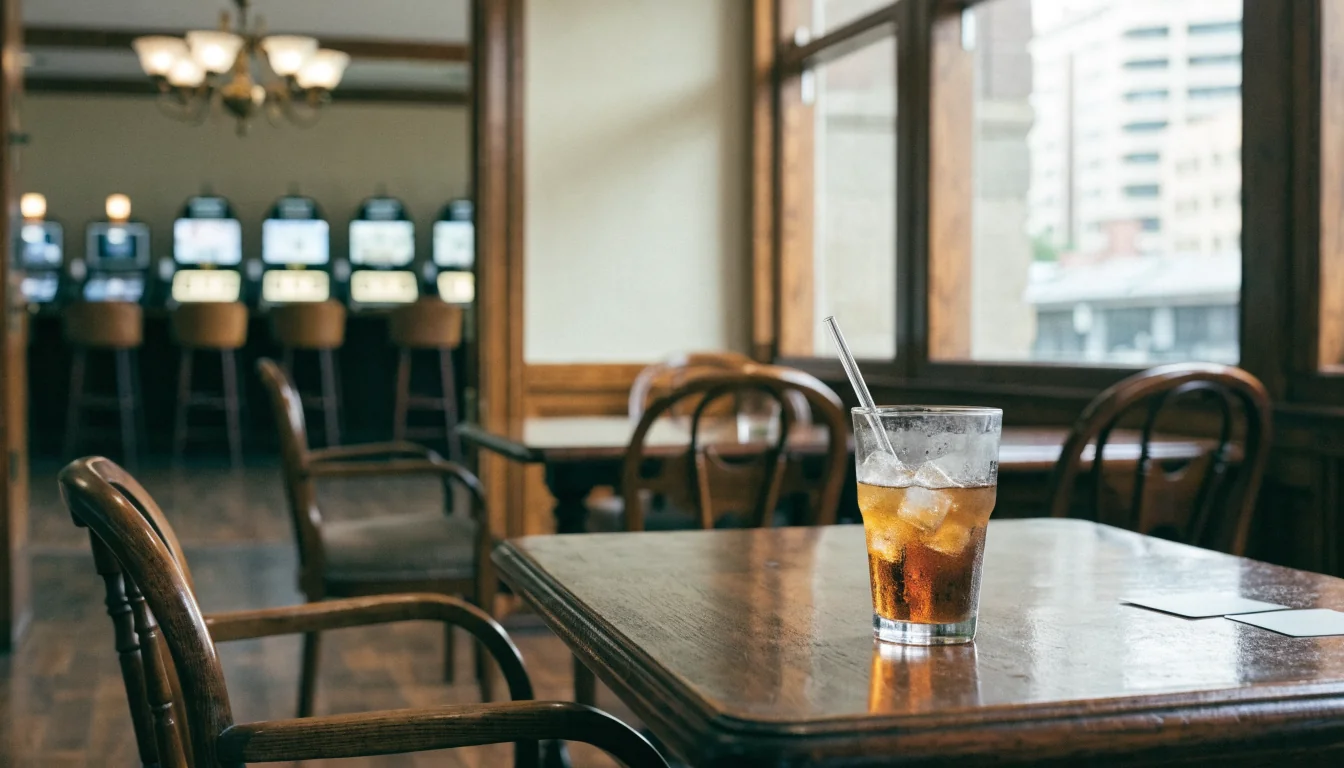
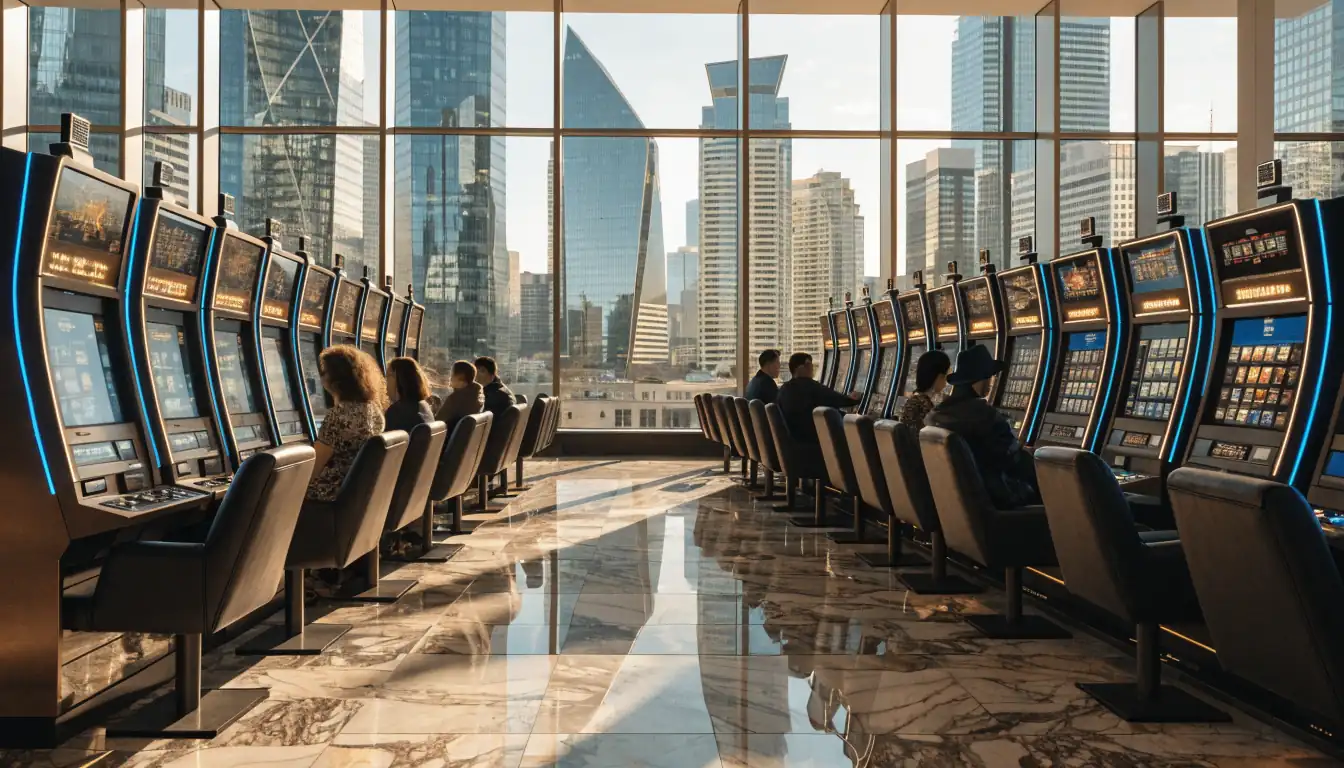
Casino floors. Tasmania has its casino gaming rooms, and these are where you’ll find the biggest variety of cabinets — multi-line video pokies, feature-heavy games with bonus rounds, and the kind of high-denomination machines that pubs generally don’t bother stocking. If you want the widest selection under one roof, a casino floor is still your best bet. The atmosphere is different too — more polished, more staff around, longer opening windows.
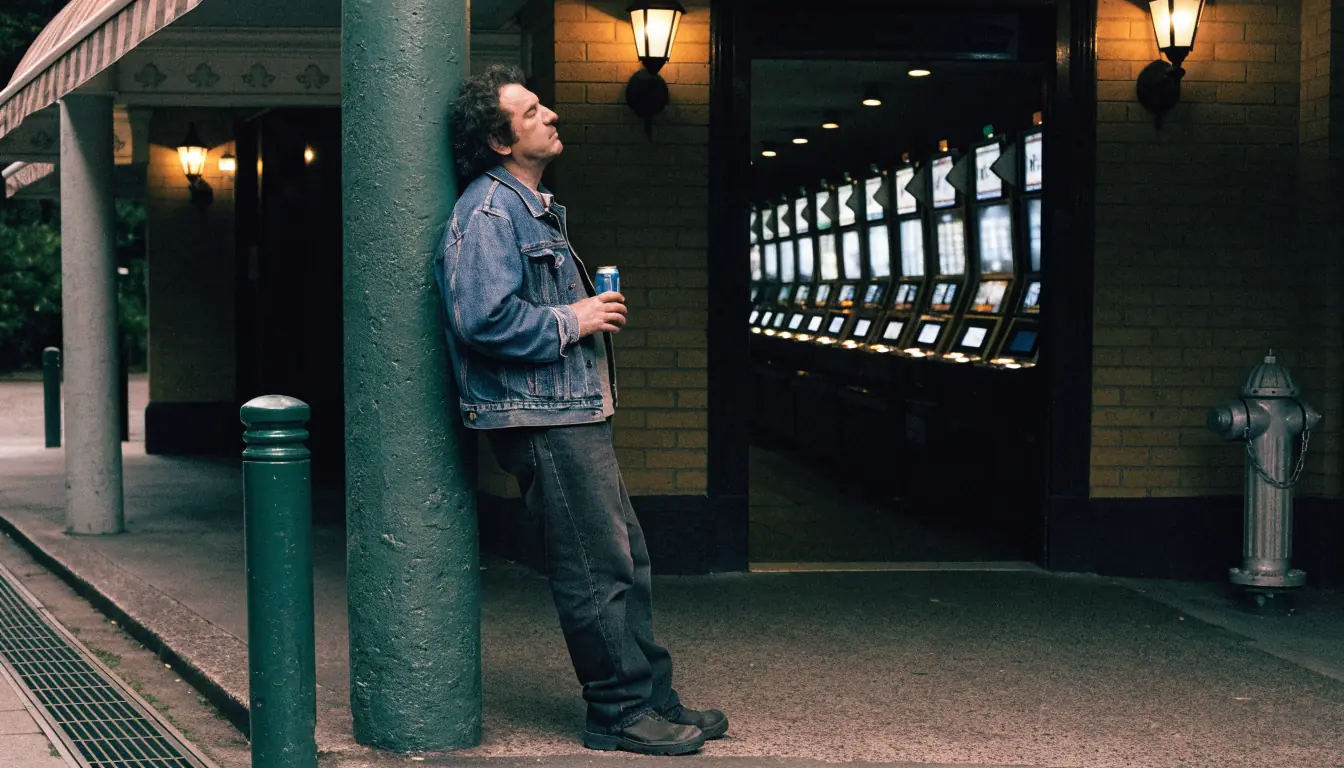
Pubs. This is where most Tasmanians actually play. Local pubs typically run a smaller bank of machines, often a mix of older, well-worn titles alongside a handful of newer releases the venue rotates in when a supplier deal changes. I’ve found pub machines tend to be simpler — fewer bonus features, more straightforward reel-and-line setups. That’s not necessarily a bad thing. Fewer bells and whistles means less temptation to chase a bonus round you don’t understand.
Clubs. Clubs sit somewhere between pubs and casinos in terms of scale. A licensed club — RSL-style venues, bowls clubs, community clubs — will often have a slightly bigger room than a pub, sometimes with a dedicated gaming lounge separate from the bar. Club membership sometimes gets you small perks, though I wouldn’t plan a trip around that; the actual games on the floor are the same brands and same style you’d see anywhere else in the state.
What ties all three together is that none of them exist outside the state’s regulatory umbrella. Every machine on every floor, whether it’s in a five-star casino or a suburban pub, answers to the same Tasmanian oversight system — it’s just that the venue type changes the number of machines, the range of stakes, and the general vibe of the room.
Types of Machines: What’s Actually on the Floor
When I say "types," I don’t mean brand names — I mean the different mechanical and structural categories you’ll bump into as you walk a gaming floor in Tasmania.
Multi-line video pokies. These are the modern standard. Instead of a single payline across three reels, you’re looking at five reels and anywhere from a handful to dozens of ways to land a win. They’re the ones with the elaborate themes, animated bonus rounds, and the free-spin triggers that keep you sitting there "just one more spin" longer than you meant to.
Standard reel-style machines. Older venues, and older sections of newer venues, still run simpler layouts — closer to the traditional three-reel look, fewer active lines, less visual noise. I actually prefer these on nights when I want a slower, cheaper session rather than a fast multi-line grind. They burn through your stake at a gentler pace, generally speaking, because there’s less going on per spin.
Multi-terminal and linked machines. Some venues link a bank of machines to a shared jackpot pool, so the number climbing at the top of several screens is the same pot no matter which of those linked machines you’re sitting at. It changes the psychology of the room — you’ll notice players parked in front of these for longer stretches, because the shared pot creates a sense that "it’s due" even though nothing about a linked jackpot works that way mechanically.
One important thing to flag on regulation: Australian gaming law is specific about what a machine is allowed to look like and simulate. You won’t find, and legitimately licensed venues won’t offer, machines dressed up with spinning-reel imagery lifted from other unlicensed or informal gaming devices — the presentation of an approved gaming machine has to meet the standard set for it, not mimic something outside that approval. It’s a detail most players never think about, but it’s part of why the machines on a licensed Tasmanian floor look and behave the way they do, rather than however a manufacturer might otherwise want to build them.
Casinos, Pubs, and Clubs: The Practical Differences
I’ll break down what actually changes for you as a player depending on which type of venue you walk into, because the honest answer is: quite a lot, even before you touch a machine.
Venue differences
The type of venue determines floor size, machine variety, and atmosphere, so choose based on the experience you prefer.
| Venue type | Typical floor size | Machine variety | Atmosphere |
|---|---|---|---|
| Casino | Largest | Widest range of cabinets and stake levels | Formal, staffed, resort-style |
| Club | Medium | Moderate range, often includes older and newer stock | Casual, community feel |
| Pub | Smallest | Narrower selection, simpler machines common | Relaxed, mixed with regular bar crowd |
None of that table is a ranking of "best" — it’s just what you should expect walking in the door. I’ve had better nights in a modest pub with three machines than I’ve had on a packed casino floor, mostly because a quieter room means I actually paid attention to what I was doing instead of getting swept up in the noise.
Getting to and Around: The Spirit of Tasmania Angle
A question I get asked a fair bit: is there any gaming to be had on the ferry crossing over, on the Spirit of Tasmania? I’ll be straightforward about this one rather than string you along — the ferry crossing is a transport service between the mainland and Tasmania, and any entertainment offering on board falls under a completely different regulatory basis than a licensed land-based venue in a Tasmanian pub, club, or casino. If you’re boarding hoping for a pokies room the way you’d find in a Hobart club, you’re going to be disappointed, and I’d rather tell you that now than have you spend the crossing hunting for something that isn’t the main event onboard. Treat the ferry as the way you get to the machines, not as a venue with its own gaming floor to compare against what’s waiting for you on land.
Hours: When You Can Actually Sit Down and Play
This is where a lot of first-timers trip up, myself included, back when I first moved to Hobart and assumed every gambling venue ran around the clock because that’s the reputation Australian pokies venues have generally earned on the mainland.
Tasmania’s venues don’t all run 24 hours. Whether a given pub, club, or casino gaming room is open at 3am on a Tuesday depends entirely on that specific venue’s individual licence and its own trading hours — which can, and does, vary from one address to the next even within the same suburb. Some casino gaming rooms run long hours because that’s built into the resort-style licence they hold. Pubs and clubs are much more varied — some shut the gaming floor down well before the bar itself closes, others keep the machines running as long as there’s a licensed staff member rostered to supervise the room.
The practical lesson here, and it’s one I learned the hard way after a wasted drive out to a venue that had already locked the gaming room for the night: never assume. If you’re planning a session late at night or early morning, call the specific venue first, or check their posted hours directly, rather than assuming Tasmania mirrors whatever "24-hour pokies" reputation you’ve heard about from a bigger mainland city. Venue-by-venue is genuinely the rule here, not the exception.
What I can tell you generally is that the venues most likely to offer extended hours are the ones attached to accommodation or resort-style operations, simply because their whole business model depends on catering to guests at odd hours rather than a strict 9-to-5 local pub crowd. Smaller suburban pubs and clubs tend to align gaming room hours much more closely with standard licensed trading hours for that type of venue.
What "Cashless" Actually Means on a Tasmanian Floor
Cashless gaming gets talked about a lot right now, and I want to be careful here not to overstate what I actually know versus what’s just chatter I’ve heard at the bar. What I can say with confidence, because it comes directly from how gaming machines are regulated at the state level, is this: the specific technical setup of any individual machine — whether it accepts a card, a ticket, or straight cash — is a decision that sits within each state’s own regulatory framework, and it’s not uniform across Australia.
Compare that to what’s happening elsewhere in the country, just so you’ve got the shape of the trend without me putting words in Tasmania’s mouth. Some states are actively pushing venues toward carded, trackable play as a harm-reduction measure. Others are trialling cashless systems at a small scale and finding limited player uptake so far. The direction of travel nationally is toward more digital, trackable forms of play rather than pure note-and-coin machines — but how far along that path any specific Tasmanian venue is on a given visit is genuinely something you find out by walking in the door, not something I’d want to guess for you here.
- Bring both cash and a prepaid card to cover all venues.
- Check venue hours before you go.
- Rely on only one payment method.
- Assume all venues accept cashless payment.
My honest advice, from personal experience of turning up expecting one thing and finding another: bring both. Have cash on hand for a venue that hasn’t moved off traditional note acceptors, but don’t be shocked if a newer casino floor asks you to load funds onto a card or ticket system instead. The trend is real; the pace of it varies venue to venue.
The Regulator Behind the Curtain
Every machine you sit down at in Tasmania exists because someone approved it, tested it, and keeps checking on it. I don’t think about this much when I’m actually playing — nobody does — but it’s worth understanding once, because it explains why the experience feels different from, say, an unlicensed setup you might stumble on overseas.
Because Australia splits gambling oversight between state, territory, and federal levels rather than running it through one national body, Tasmania’s own regulatory apparatus is responsible for licensing venues, approving specific machine models before they ever hit a floor, and setting the rules those venues operate under. This is the same basic structure you’ll find in Queensland with its Office of Liquor and Gaming Regulation, or in New South Wales with Liquor & Gaming NSW — each state runs its own version of the same job, just under a different name and with its own specific numbers attached.
What that means practically for you as a player: the machine in front of you didn’t just show up because a pub owner liked the graphics. It went through an approval process specific to Tasmania before it was allowed on that floor. That’s a layer of protection you don’t get with unregulated or offshore alternatives, and it’s one of the genuine advantages of sticking to licensed, land-based Tasmanian venues rather than chasing something flashier that operates outside any Australian state’s oversight.
A Few Things I Wish Someone Had Told Me Earlier
I’ll be blunt about a few habits I picked up the slow way, through actual losses rather than good advice.
Different venues, different machine ages. A casino floor refreshes its stock more often than a small suburban pub. If you’re chasing a specific newer title, you’re more likely to find it on a casino floor than tucked in the corner of a local club. If you don’t care about the theme and just want a simple, low-stakes session, an older pub machine will do that job just as well, usually for less outlay per spin.
The room matters as much as the machine. I’ve noticed my own play gets sloppier in loud, crowded rooms where everything’s flashing and it’s hard to hear your own thoughts. A quieter club on a weekday afternoon is a completely different experience to a casino floor on a Saturday night, and it’s worth picking your moment as much as your venue.
Hours are a phone call, not an assumption. I said this above but it’s worth repeating on its own: Tasmania’s gaming room hours are set venue by venue. Don’t drive across town at midnight on a guess.
Cash and card both have a place, for now. Until every venue settles on one system, carrying both options covers you whichever floor you end up walking onto.
The state sets the floor, not the ceiling. Just because a return rate or a rule is set at the state level as a minimum doesn’t mean every venue or every machine sits exactly there — but it does mean you’re never below a certain baseline at a properly licensed Tasmanian venue. That baseline, and how it compares to the neighbouring states I mentioned earlier, is worth its own close look — which is exactly what’s coming next.
I’ve walked into enough pubs, clubs, and casino floors across this state to say the variety is real, even if the overall footprint is smaller than what you’d find in Sydney or Melbourne. The types of machines don’t differ wildly from what’s on offer elsewhere in the country — multi-line video games dominate, older reel-style machines linger in the smaller venues, linked jackpots pull in the patient crowd. What actually differs, and what catches people out, is the practical stuff: which venue is open when you need it, whether it’s still running on cash or has moved to card-based play, and the fact that none of this is decided by one single rulebook but by Tasmania’s own version of a system every Australian state runs a little differently.
Tasmania Pokies Payout Percentages: How the Numbers Stack Up
I used to think a "payout percentage" was marketing fluff, something casinos print on a poster and nobody checks. Then I started asking venue staff what the actual return rate was, and most of them didn’t know either. Tasmania doesn’t publish a single statewide minimum the way its neighbours do, which makes cross-border comparison the only real way to see where it sits.
Payout percentages in Tasmania
Tasmania does not publish a statutory minimum return rate for pokies. Individual venues set return rates based on manufacturer specifications, which can vary widely between casinos, clubs, and pubs.
Queensland sets a floor of 85% for gaming machines in pubs and clubs, with casinos held to a higher 90%. Victoria mirrors that 85% minimum, though it pairs it with a hard rule that machines there can’t accept bills over $50 — a detail that says more about how Victoria treats problem gambling than it does about returns.
Line Tasmania up against that, and the honest answer is: there’s no published statutory minimum to point to here. Machines run on manufacturer-set return rates rather than a state-mandated floor.
Worth checking the machine, not the state.
Online Pokies for Tasmanian Players – Legal Landscape and Options
Here’s where people get confused, and I was one of them for a while. You can walk into a Tasmanian venue and legally play gaming machines. Go looking for the same thing online, real money slots, real payouts, and the picture changes completely. Not because Tasmania has some special rule against it. Because federal law does.
The Interactive Gambling Act makes it an offence for an operator to provide online casino games to Australian residents. Full stop. It doesn’t matter if you’re in Hobart, Launceston, or anywhere else on the island. The law applies at the national level, which means it sits above whatever Tasmania’s own gaming regulations say about machines in pubs and clubs. Crown doesn’t run an online pokies platform for Tasmanian residents, and no local licensed operator does either, because the Act specifically targets the operator side of things.
That’s the detail people miss. The offence is on whoever’s running the show, not on you for logging in and having a spin. Australian residents who deposit at offshore casinos face no criminal exposure. I’ve had this conversation with mates who assumed they were breaking some law by playing on an overseas site. You’re not. The site itself, if it’s targeting Australians without a local licence, is the one operating illegally. You’re just… playing. Legally murky in terms of consumer protection, sure, but not a crime on your end.
What the penalties actually look like
The numbers here aren’t small. Breaching the Interactive Gambling Act can cost an individual operator up to AU$360,000 per day, and a corporation up to AU$1.8 million per day. Per day. That’s not a one-off fine you shrug off, that’s the kind of figure that’s meant to shut a business down or keep it offshore permanently, which is exactly why almost none of these platforms bother getting an Australian licence. They just operate from outside the reach of the Act and take the risk that comes with it.
And the government isn’t just writing the law and walking away. ACMA has blocked more than 1,564 illegal gambling sites since November 2019 through what are called s.313 referrals, basically ordering internet providers to cut access. I’ve had a bookmarked site vanish overnight this way. No warning, no email, just gone. A week later a near-identical site pops up under a different name, same graphics half the time, and the whole cycle starts again. It’s a game of whack-a-mole and ACMA’s been playing it for years without ending it.
The bigger picture
None of this is happening in a vacuum. The online gaming industry is worth billions of dollars and keeps growing at a pace that outstrips most other entertainment sectors. Tasmania’s brick-and-mortar machines are a fixed, regulated, physically located thing you can point to. Online is the opposite: borderless, largely offshore, and growing regardless of what any single state does about it.
If you’re weighing up "online pokies real money" against a trip to a licensed Tasmanian venue, understand you’re choosing between two very different regulatory worlds. One has a state regulator, minimum return rates, and a physical address you could walk into. The other has an operator somewhere you’ll never visit, a licence from a jurisdiction you’ve never heard of, and payout terms you’re trusting on faith. Neither path breaks the law on your end. Only one of them has someone accountable if things go wrong.
Is online sports betting legal in Australia?
Yes, online sports betting is legal, and the Northern Territory alone licenses about 40 online wagering brands handling roughly AU$50 billion in annual turnover.
Are online casino game providers legally allowed to operate in Australia?
No, the Interactive Gambling Act 2001 makes it an offence for an operator to provide online casino games, slot machines, or poker to Australian residents, with penalties up to AU$360,000 per day for individuals and AU$1.8 million per day for corporations.
What responsible gambling tools do Australian casinos offer?
Australia runs a National Self-Exclusion Register called BetStop, active since August 2023, which had 49,382 registrations as of 30 September 2025; it covers around 150 Australian-licensed wagering providers, though offshore casinos fall outside its reach. Some states are also adding measures like Victoria’s mandatory carded play and default loss limits.