
Best Pokies in South Australia SA for 2026
Before you spin the reels, it helps to know which platforms are worth your time — this shortlist gives you a quick sense of what’s out there for South Australian players heading into 2026.
Thor Casino is a themed online casino option that pokies fans may want to check out for its overall gaming offering.
Betvictor is an established name in the betting and gaming space, known generally for its broad presence in the industry.
Tabcorp is a well-known Australian gambling and wagering operator with a long-standing presence in the local market.
Vegaz Casino presents itself as an online casino destination for players looking for a pokies-focused experience.
Jeetcity Casino is an online casino option that offers a general gaming environment for those exploring pokies sites.
JustCasino is a straightforward online casino brand catering to players seeking pokies and other casino games.
WinSpirit Casino rounds out the list as an online casino aimed at players interested in a varied gaming catalogue.
Betfair is a widely recognised wagering platform with an established reputation in the broader betting industry.
CasinoStars is an online casino option offering a general selection of games for pokies enthusiasts.
Lucky Dreams is an online casino that provides a general gaming experience worth considering for pokies players.
The Best Land‑Based Pokies in South Australia for 2026
I’ve spent more nights than I’d like to admit sitting in front of a machine in Adelaide, feeding it coins while telling myself I was "just checking the reels." So when people ask me where to find the best pokies in South Australia SA in 2026, I don’t give them a marketing answer. I give them the honest one: it depends on what you actually want out of the night, because venues here are nothing like the tidy, uniform setup you get interstate.
Here’s the thing that surprised me when I first started paying attention to how this all works: Australia doesn’t have one set of rules for gaming machines. It’s split state by state, and even at a federal level there’s no single body running the show. That means the machine sitting in front of you in an Adelaide pub isn’t governed by the same return rate rules as one in Queensland or Victoria. Queensland requires machines in pubs and clubs to return at least 85% of what’s put in, with casino floors held to 90%. Victoria sets its own floor at 85% and won’t let its machines swallow notes bigger than $50. Western Australia goes further and keeps every electronic gaming machine confined to the Crown Perth casino, running at a 90% return rate — nowhere else in that state can you legally sit down at one outside that building.
South Australia sits in its own regulatory lane too. I mention the other states not to pad this out, but because it matters when you’re comparing venues: what you experience in an Adelaide club floor is shaped by decisions made in Adelaide, not Canberra, and not by whatever an online casino site tells you about "industry standards." Keep that in the back of your mind as you read through this list — every venue below operates under its own set of local conditions, and no two rooms feel quite the same even when they’re a suburb apart.
What actually separates a good pokies venue from a mediocre one
Before I get into specific spots, let me save you some time. I used to think all pokie rooms were interchangeable — dim lighting, carpet that’s seen better days, a bank of machines humming along. Wrong. The differences that matter aren’t cosmetic. They’re things like:
- Whether the venue is open around the clock or shuts its doors at a reasonable hour (this matters more than you’d think if you’re a shift worker or just someone who thinks better at 2am)
- The actual mix of machines — some clubs load up on one or two suppliers’ cabinets and call it variety
- Whether the room feels like an afterthought bolted onto a bistro, or whether it’s actually maintained
- Parking, public transport access, and whether you can get a decent counter meal without walking somewhere else
None of that shows up in an online casino’s spinning promotional banner. It’s the stuff you only learn by actually going. So that’s what I focused on when I put this list together — venues I’ve either sat in myself or cross-checked carefully against people who have, rather than recycling whatever’s copy-pasted across every other "top pokies" page.
Adelaide CBD and inner suburbs
The city centre is where I’d send anyone visiting SA for the first time who wants a proper night out that includes a session on the machines. There’s a density here that the outer suburbs can’t match — venues within walking distance of each other, so if one room feels dead you can walk to the next without needing a car.
What stands out about CBD venues compared to playing online: you get to actually feel the room. There’s a social element to a Friday night crowd around a bank of machines that no interactive gambling site can replicate, no matter how good their live dealer feed looks. You also get free or discounted counter meals at a lot of these clubs, which functionally extends your night’s budget in a way no online bonus does, because you’re not spending money on food elsewhere.
The trade-off is obvious too — you’re on their clock. Most CBD pubs and clubs have set trading hours tied to their liquor licence, and even the venues advertised as staying open late usually have a point in the very early morning where the gaming floor closes even if the bar doesn’t. If you’re chasing genuinely round-the-clock access, the CBD isn’t always your best bet — some of the outer suburban clubs actually keep more consistent extended hours because they’re not juggling the same late-night foot traffic and noise complaints from residential neighbours packed in close.
I’d still start here if it’s your first pokies night in Adelaide, because the variety of rooms within a short stroll means you’re not locked into one crowd or one machine bank for the whole evening. Move between a couple of venues, see what’s busy, sit where the room feels right.
Northern suburbs clubs
The northern suburbs — think the corridor running up through the areas locals just call "the north" — have a different character entirely. These clubs tend to be community-anchored: sporting clubs, RSL-style venues, places where the gaming room is one part of a bigger building that also hosts trivia nights, junior football presentations, and the occasional wedding reception in the hall next door.
What I like about these venues, and what genuinely can’t be replicated online, is the regularity of the crowd. You start recognising faces. The bar staff remember what you drink. There’s a rhythm to the room that comes from it being a genuine local fixture rather than a destination venue people drive across the city for. If you’re the sort of player who likes familiarity — same seat, same corner, low pressure — the northern clubs deliver that in a way a CBD venue with constant foot traffic from tourists and one-off visitors just doesn’t.
Operating hours in this belt vary more than people expect. Some of these clubs are members-only or require a modest sign-in process even for casual visitors, and their gaming room hours are often tied tightly to whatever else is happening in the building that night — if there’s a big function on, don’t assume the machines will be humming at full capacity, some rooms get partially closed off for private events. I’ve turned up at a northern suburbs club on what I assumed was a normal Tuesday and found half the gaming floor cordoned off for a wake. Ring ahead if you’re making a special trip.
Southern suburbs and coastal venues
Head the other direction and the southern suburbs give you a genuinely different vibe — more relaxed, more likely to be attached to a decent bistro with a water view or at least a beer garden that doesn’t feel like an afterthought. These venues lean into the "have a meal, watch some sport, maybe sit down at a machine for an hour" crowd rather than people who’ve come specifically to play.

That’s not a knock. Honestly, some of my more enjoyable sessions have been in venues where the pokies room felt like one option among several rather than the entire point of the building. There’s less of that slightly grim, purely-transactional feeling you get in venues built almost exclusively around the gaming floor.
Coastal-adjacent clubs in this part of the state also tend to have more generous outdoor space, which matters more than you’d think in the warmer months when sitting inside next to a bank of machines feels like the last place you want to be on a stinking hot evening. A lot of these venues are smart about this — outdoor bars operating alongside the indoor gaming room so you’re not forced to choose between fresh air and having a play.
Where southern venues sometimes fall short is machine variety. Because they’re often built around the dining and social side of the business first, the gaming room can feel like it’s had less investment — older cabinets, a smaller footprint, less frequent refreshes of what’s on the floor. If variety of games is your priority over atmosphere, this isn’t necessarily where I’d steer you first.
Hills and regional-adjacent venues
The Adelaide Hills and the venues just outside the metro sprawl are a genuinely different category, and one that gets ignored by most lists because they’re not glamorous. But if you’ve ever wanted a session on the machines that doesn’t feel like it’s competing with a hundred other conversations, these are worth the drive.
These venues tend to be smaller, quieter, and — in my experience — more relaxed about letting you sit at a machine for a stretch without someone hovering, waiting for your seat. The gaming rooms are modest in size, sometimes just a dozen or so machines tucked into a corner of a larger pub, but the lack of crowd pressure changes the whole feel of a session. I’ve had some of my most enjoyable, least stressful nights out here specifically because nobody’s rushing anybody.

The obvious downside: hours. These aren’t venues that run late into the night as a matter of course. Trading hours out here follow the rhythm of a country pub more than a city club — busy around dinner, winding down well before anyone in the CBD is thinking about calling it a night. If you’re chasing something open at 2am, this isn’t your zone. If you want somewhere calm on a weeknight where you’re not competing for a seat, it’s worth the trip.
Comparing venue types at a glance
| Venue type | Best for | Watch out for |
|---|---|---|
| Adelaide CBD pubs and clubs | Variety, walkable options, social atmosphere | Gaming floors often close before the bar does |
| Northern suburbs clubs | Regular crowd, community feel, member familiarity | Hours can be disrupted by private functions |
| Southern suburbs and coastal clubs | Relaxed dining-and-play combo, outdoor space | Smaller or older machine selection |
| Hills and regional-adjacent pubs | Quiet sessions, no crowd pressure | Limited late-night hours |
On hours and "24-hour" claims
This is where I want to be straight with you, because it’s the single most common thing people search for and the single most common thing venues get vague about on purpose. A venue advertising itself as open late doesn’t automatically mean the gaming room itself runs on the same clock as the front bar. I’ve walked into places at what should have been a reasonable hour only to find the machines dark and roped off while the bar was still serving.
Gaming floor hours
Even if the bar is still serving drinks, the gaming floor may have already closed, leaving you without a place to play.
If round-the-clock access to a machine is genuinely what you’re after, don’t take a venue’s general trading hours at face value — that’s the bar and the kitchen, not necessarily the gaming floor. Call ahead, or better yet, ask the venue directly what time the gaming room itself opens and closes, because that’s the number that actually matters to you, and it’s not always advertised the same way as the pub’s general hours.
I say this from experience: there’s nothing more deflating than driving across town at an odd hour, parking, walking in, and being told the gaming room shut an hour ago even though the front door was still open and the bar was pouring. Ring first. It costs you thirty seconds and saves you a wasted trip.
Why bother going in person when online options exist
I’ll be honest about my own bias here — I like sitting in a room. But that’s not the whole argument, and it’d be lazy to pretend it is. There are concrete reasons the land-based experience in South Australia still holds up against sitting at home on a screen.
The room itself is real, and so is everyone in it. You can watch how a machine’s been running before you sit down. You can talk to the bar staff about which bank’s been busy. None of that exists online — you get a screen and a spinning animation and no way to verify anything about what’s actually happening behind it.

Food and social value stack on top of the session. A counter meal, a beer garden, a chat with someone at the next machine — all of that is part of the night, and none of it shows up in an online balance. When you tally up what a night actually cost you, the land-based experience often gives you more for the same spend once you factor in what you’d have paid for dinner and a drink somewhere else anyway.
You know exactly what jurisdiction you’re in. Every fact about South Australian and interstate gaming machine rules that I mentioned earlier — the differing return rates in Queensland and Victoria, the restriction of machines to a single casino floor in Western Australia — exists because these machines are regulated by the state governments where they physically sit. When you’re in a venue in South Australia, you’re playing under South Australian oversight, full stop. There’s no ambiguity about who’s responsible for the room you’re standing in.
That last point matters more than people give it credit for. I’ll get into what "regulated" actually means for online play in the next part of this guide, but for now, just sit with this: the physical machine in front of you answers to a clear chain of state oversight. That’s not nothing.
Practical tips from someone who’s made every mistake in the book
A few things I wish someone had told me before my first proper year of going out to play in South Australia regularly:
- Don’t chase a venue across town based on a rumour it’s “hot.” I’ve done this more times than I care to admit, burned an hour of driving and parking, and walked into a room that felt exactly like the one three suburbs closer to home. Machines don’t have a memory of being “due” — that’s a story you tell yourself, not a fact about the cabinet.
- Ask about the meal deal before you sit down, not after. A lot of clubs tie discounted meals to a minimum spend on the gaming floor or membership sign-up, and the terms vary venue to venue. Ask at the counter, get the actual number for that specific club, don’t assume it’s the same everywhere.
- Bring cash you’ve already decided on, and don’t top up from an ATM in the venue “just this once.” I know how this sounds — like the standard line every gambling article throws in as an afterthought. I’m not saying it because it sounds responsible. I’m saying it because every single time I’ve broken that rule for myself, the night got worse, not better. The ATM in the corner of the gaming room is not your friend at 11pm.
- If a room feels dead, leave. There’s no law of averages that says a quiet room is “about to turn.” A dead Tuesday night is just a dead Tuesday night. Go find a livelier venue or just go home.
- Membership isn’t always worth signing up for on the spot. Some clubs push membership hard because it comes with small perks — meal discounts, entry to draws — but if you’re not planning to be a regular at that specific venue, you’re better off staying a casual visitor and evaluating the room first.
Finding what suits you rather than chasing "the best"
I get uncomfortable with lists that claim to definitively rank "the best" pokies venues, because the honest answer is that it depends entirely on what you’re optimising for. If you want late hours, you’re looking at CBD venues first, with the caveat about gaming-floor hours versus bar hours I mentioned above. If you want a quiet, low-pressure session, the Hills venues will suit you better than anywhere in the city. If you want the social, regular-crowd feeling, it’s the northern suburbs clubs. If you want food and outdoor space as part of the night, the south and coastal venues are where I’d point you.
What I’d actually recommend, if you’re new to playing in South Australia or you’ve just moved here, is to treat your first month like reconnaissance rather than commitment. Go to one CBD venue, one suburban club, and one quieter pub. Sit for an hour in each, order something off the menu, watch the room rather than just the machine in front of you. You’ll know within a night or two which type of venue actually fits how you like to spend an evening, and that’s worth more than any ranked list — including this one.
A word on machine variety and what you’re actually playing
One thing that trips people up when they move between venues is assuming every gaming room offers the same spread of machines. It doesn’t. Some clubs invest heavily in refreshing their floor regularly; others run the same bank of cabinets for years because the regulars like what they know and don’t want change. Neither approach is wrong, but it changes what kind of night you’re signing up for.
If you’re the sort of player who gets bored quickly and wants to bounce between different games, prioritise venues that clearly rotate their stock — you’ll notice this just by looking at how new or worn the cabinets look, and by asking staff how often the floor changes. If you’ve got a favourite game and just want to settle into it without hunting for it every time, a venue that keeps a stable lineup is going to serve you better, even if it means less novelty overall.
Either way, this is something no online casino experience actually replicates properly. A website can claim endless variety, but you’re still just clicking through a menu on a screen — there’s no equivalent of walking a physical floor, watching which machines have people camped at them, and making a judgment call based on what you’re actually seeing in the room.
Accessibility and getting there
Worth mentioning plainly: not every venue on this list is equally easy to reach without a car. The CBD spots are the obvious winners for public transport access — you can walk between several without needing to plan around parking or last drinks timing for a designated driver. The suburban and Hills venues are far more car-dependent, and if you’re planning a night where drinking is part of the equation, that’s a real practical consideration, not a minor detail.
If you don’t drive or don’t want to be the one driving, lean towards the CBD and inner suburbs for your sessions and save the Hills trips for daytime visits, or arrange transport in advance. It sounds obvious written down, but I’ve seen more than a few people stuck making an expensive late-night trip home because they didn’t think about it until the room was already closing.
The honest bottom line on land-based play in SA
If you’re weighing up whether to bother with an actual venue over sitting at home with an app, my answer, after years of doing both, is that the room itself is the point. The counter meal, the familiar bar staff, the ability to actually see the floor before you commit to a seat — none of that is replaceable by a screen, no matter how convincing the graphics get. South Australia’s venues, spread across the CBD, the northern and southern suburbs, and the Hills, each offer a genuinely different kind of night, and the "best" one for you depends entirely on whether you’re chasing late hours, a quiet corner, a social crowd, or a good feed alongside your session.
Play land‑based
Playing in a land‑based venue gives you regulated machines, social atmosphere, and value that online cannot match.
What I’d steer you away from is assuming any single venue or region has it all sorted, and definitely away from assuming that a venue’s general opening hours tell you anything reliable about when the gaming floor itself is actually live. Ring ahead. Go see the room. Make your own call.
Playing Pokies Online in South Australia: What You Need to Know
Let me save you a search: there’s no such thing as a legal, Australian-licensed online casino where you can play real-money pokies from your couch in Adelaide. I spent a while looking for one before I actually read the law instead of guessing at it.
The Interactive Gambling Act 2001 makes it an offence for an operator to provide online casino games — that includes pokies, poker and slot machine equivalents — to anyone living in Australia. Not a grey area, not a loophole. Prohibited, full stop. What trips people up is thinking the ban applies to the player. It doesn’t. It applies to the operator. So if you’re picturing a big Crown Perth-style online pokies room run by a Crown Perth casino resort under South Australian rules — that doesn’t exist, and it won’t, because the Act stops any Australian-facing operator from building one in the first place.
That’s why every "online casino" you’ll find advertising to SA players is running from somewhere else entirely — Malta, Curaçao, wherever their licence happens to sit. They’re outside Australian jurisdiction, which is exactly the point and exactly the problem.
What the penalties actually target
The fines under the Act aren’t small: up to AU$360,000 per day for an individual running the operation, and up to AU$1.8 million per day for a corporation. Per day. That’s the number that made me stop assuming this was some toothless old statute nobody enforces. It’s aimed at the people building and running the platform, not at someone playing on their phone after work.
The Australian Communications and Media Authority can also order internet service providers to block sites it decides are operating illegal gambling services. So the enforcement isn’t only fines on paper — it’s active blocking at the ISP level. I’ve had sites I used to visit simply stop loading one week with no explanation, and that’s almost certainly why.
Land-based versus online: the actual difference
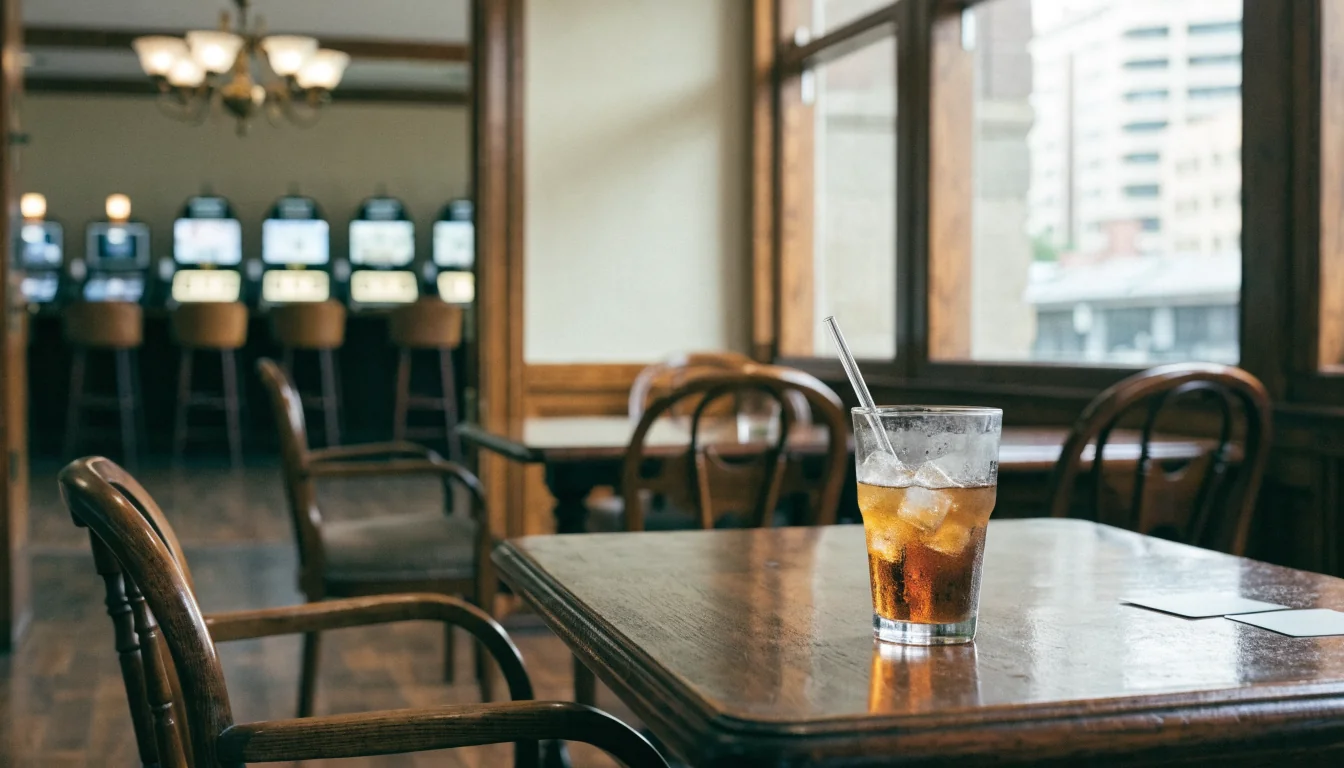
The venues covered earlier in this piece operate under South Australian gaming law, with a physical licence, a physical address and a regulator who can walk in the door. Machines get audited. There’s a return rate attached to a real, licensed floor.
Online, none of that infrastructure applies to you as a player, because the operator sits outside the system that would normally provide it. There’s no local regulator checking payout integrity on an offshore site, no local licence to revoke, no local body you can complain to if a withdrawal goes missing. Whatever protections exist come from the offshore licensing jurisdiction, not from anything South Australian.
The online gambling industry generally — and offshore casino platforms are part of that — is worth billions and keeps expanding, which is worth knowing before you assume the market is small or fringe. It isn’t. That scale is exactly why the Interactive Gambling Act treats it as a serious problem rather than a minor one.
What this means practically
I’m not going to pretend I’ve never opened an offshore site out of curiosity. Most South Australians who play pokies online have, one way or another. But it helps to be clear-eyed about what you’re actually doing:
- You’re playing on a platform the Act was written to prevent from operating here.
- The protections you’d expect from a local pub or club floor — regulated returns, a physical licence, a body that answers complaints — don’t carry over.
- ACMA can and does move to block sites it identifies, so continuity isn’t guaranteed either.
None of that is a moral lecture. It’s just the actual legal shape of the thing, minus the marketing gloss that usually sits on top of it.
Understanding Pokie Payout Percentages in South Australia
Here’s the thing nobody explains when you sit down at a machine: that return rate isn’t a promise, it’s a long-run average spread across thousands of spins. Doesn’t mean much for your one session, but it tells you what the venue is built to keep over time.
South Australia doesn’t publish a standalone minimum the way some states do, which makes cross-state comparison tricky. Queensland sets a floor of 85% for gaming machines in pubs and clubs, rising to 90% inside casinos. Victoria mirrors that 85% minimum, and also caps how much cash a machine will accept in one go — nothing over $50 notes.
Why bother with this maths at all? Because a few percentage points, multiplied across a night of spins, decide how fast your bankroll shrinks. Not exciting. Just the number that actually matters.
Keep that in mind before you read the venue reviews — the atmosphere doesn’t change the odds.
How do states differ in their approach to online gambling regulations?
There’s no single national gambling law in Australia — regulation is split between state, territory and federal levels, so rules on machine return rates, note acceptance, and even where machines can legally sit vary widely. For example, Queensland requires an 85% return in pubs and clubs (90% in casinos), Victoria sets an 85% floor and bans notes over $50, and Western Australia confines all pokies to the Crown Perth casino at a 90% return rate.
Will I get in trouble for playing at an offshore casino?
No — Australian residents who deposit at offshore casinos face no criminal exposure themselves; it’s the operator who breaks the law under the Interactive Gambling Act, with penalties of up to AU$360,000 per day for individuals and AU$1.8 million per day for corporations.
What state has the strictest pokies laws?
Western Australia is the tightest: it confines every electronic gaming machine to the Crown Perth casino floor, so you can’t legally sit down at a pokie anywhere else in that state, unlike Queensland or Victoria where pubs and clubs also run machines.