
Best Pokies in New South Wales: NSW Guide
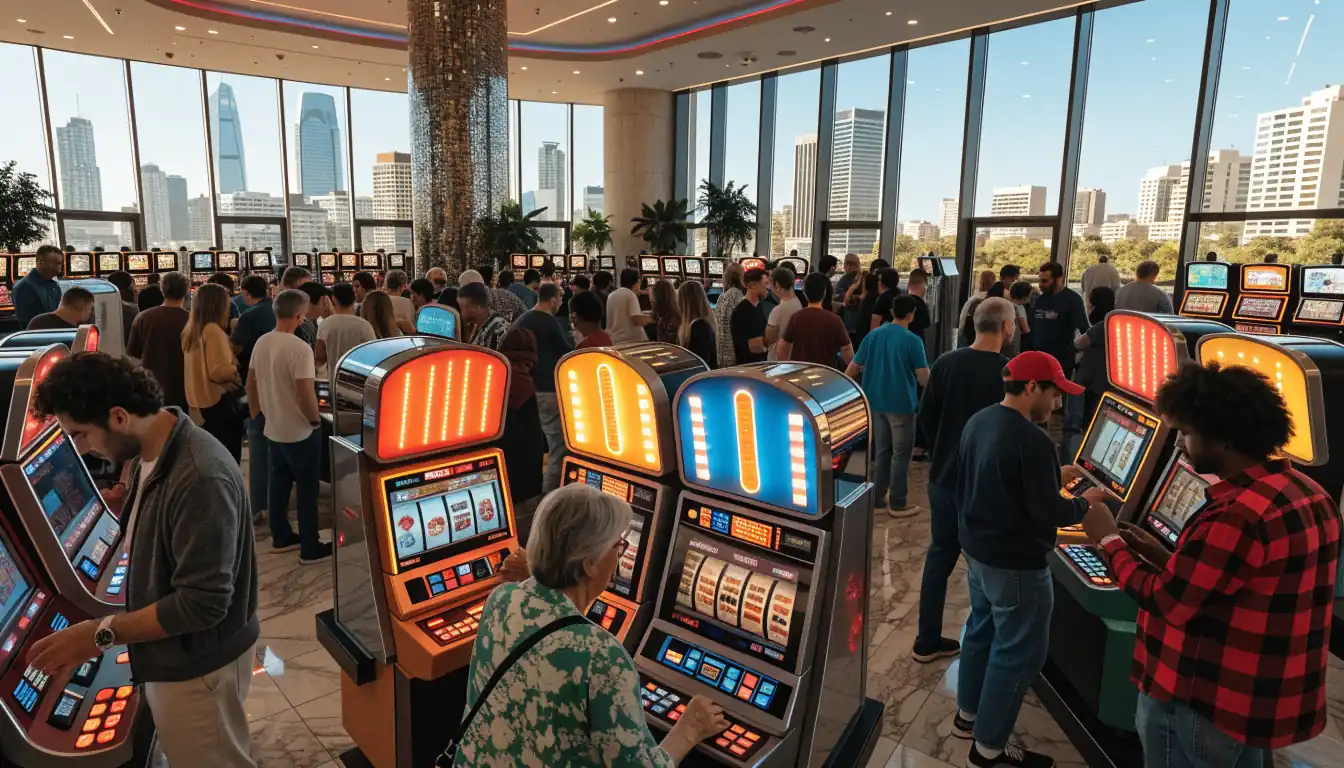
With so many pokies venues and platforms available across New South Wales, it helps to know which operators are worth your attention before you start spinning. This shortlist gives you a quick, no-nonsense overview to guide your choice.
Thor Casino is a recognisable name for players seeking a pokies-focused online casino experience.
Betvictor is an established brand known across the wider betting and gaming scene, offering a broad general gambling experience.
Tabcorp is a major and long-standing name in Australian gambling, with a strong presence spanning multiple gaming and wagering services.
Vegaz Casino positions itself as an online casino option for players looking for a pokies-style gaming environment.
Jeetcity Casino offers an online casino experience aimed at players wanting a varied gaming selection.
JustCasino is an online casino brand catering to players interested in straightforward, accessible pokies-style entertainment.
WinSpirit Casino is an online gaming platform offering a general casino experience for pokies enthusiasts.
Betfair is a well-known name in the wagering and betting space, recognised for its broad presence in the gambling industry.
CasinoStars is an online casino brand aimed at players seeking a general pokies and casino gaming experience.
Lucky Dreams is an online casino offering a general gaming environment for players interested in pokies.
The NSW pokies landscape: numbers, history and regulation
I grew up thinking pokies were just something that hummed in the corner of every pub, the way a jukebox used to be. It wasn’t until I actually looked into where that hum came from that I understood New South Wales isn’t just another state with a few gaming machines scattered around. It’s the state that started the whole thing.
Where it all began
New South Wales was the first Australian state to legalise poker machines, back in 1956. That’s not a typo or a rounding error — it’s seventy years of history sitting behind every venue you walk into now. Other states came to gaming machines later, on their own terms, with their own rules, but NSW got there first and never really let go of that position. When you’re standing in a club in Wollongong or a pub in Parramatta feeding a machine, you’re plugged into something that’s been running, in one form or another, since your grandparents were young.
I mention this because it matters for how the state thinks about gaming machines today. NSW didn’t build its regulatory approach from scratch in response to some modern crisis — it’s been patching, adjusting and re-legislating around an industry that’s older than most of the buildings it operates in. That’s part of why the rules can feel inconsistent if you compare them to what you read about other states. NSW isn’t reacting to a new problem. It’s managing an old one that’s grown very large.
The scale of it
Here’s the number that actually stopped me when I first saw it: New South Wales has 87,298 gaming machines spread across 2,195 venues. Sit with that for a second. That’s not a handful of casinos with rows of machines — that’s thousands of pubs and clubs, each one running dozens of machines, all across the state. If you tried to visit every venue with gaming machines in NSW at a rate of one a day, you’d be at it for the better part of six years.
I used to assume the bulk of that number lived in flashy casino floors. It doesn’t. The vast majority of those 87,298 machines aren’t in anything you’d call a casino at all — they’re in your local RSL, your suburban leagues club, the pub down the road from where you get your hair cut. Gaming machines in Australia sit in casinos, pubs and clubs, and in NSW it’s the pubs and clubs that carry the real weight of that figure. Casinos get the headlines and the neon, but the actual density of machines is baked into community venues that most people walk past without a second thought.
That density is worth sitting with, because it changes what "best pokies in NSW" even means as a question. You’re not choosing between three or four big venues. You’re choosing between thousands of small ones, most of which look nearly identical from the outside and differ enormously once you’re actually sitting at a machine.
A state-by-state patchwork, and why NSW is different
One thing that took me an embarrassingly long time to understand is that there’s no single Australian law governing gaming machines. Gaming machines are regulated by state governments, and that means the rules genuinely differ from one border to the next. Cross from NSW into a different state and you’re not just changing scenery — you’re stepping into a completely different regulatory regime, with different limits, different licensing structures, different everything.
I found this out the hard way on a road trip a few years back, half-expecting the machine behaviour I was used to at home to carry over once we crossed the border. It didn’t, and nobody at the venue seemed remotely surprised that I was confused. That’s just how it works here. Australia doesn’t have one gambling authority making one set of rules — it’s split state by state, and each state has built its own approach based on its own political history and its own appetite for regulation.
This matters for NSW specifically because the state’s approach reflects its position as the birthplace of the industry. It’s had the longest run to build up venues, machines, and a culture around gaming that’s genuinely embedded in community life — clubs in NSW aren’t incidental hosts of gaming machines, they’re often built around the revenue those machines generate. That’s a very different relationship to gaming machines than you’ll find in a state where the industry arrived decades later and under tighter initial constraints.
The cash-input cap: a real, recent change
If you’ve played gaming machines in NSW for a while and then took a break, there’s a specific change worth knowing about before you sit down at a newer machine. On 1 July 2023, NSW introduced a cash-input cap of AU$500 on new electronic gaming machines. That means machines installed after that date won’t accept cash loads beyond that ceiling in one go.
I didn’t clock this at first because it doesn’t apply retroactively to every machine on every floor — it’s tied to new EGMs specifically, which means the venue’s mix of older and newer machines can behave differently depending on what’s actually sitting in front of you. If you’re the type who used to load up a machine with more than that in one sitting and walk away for a coffee, that habit doesn’t work the same way anymore on newer units. It’s a small detail, but it’s the kind of small detail that actually shapes how a session plays out in practice, and it’s one of the more concrete regulatory moves NSW has made in recent years around how much cash can move through a single machine at once.
Cash‑input cap
From 1 July 2023 NSW limits cash loaded onto new electronic gaming machines to AU$500 per transaction, so loading more will be rejected.
I’d argue this cap tells you something about the direction NSW is heading, even if the pace feels slow to anyone who wants faster change. The state that legalised poker machines first is now the state tightening how much cash can go into a single new machine in one hit. That’s not nothing, even if it only applies going forward rather than across the whole existing fleet.
2020: the year everything just stopped
There’s a strange asterisk sitting over any discussion of gaming machine "usage" or "activity" in Australia, and it’s worth naming directly: during the 2020 COVID-19 pandemic, every Australian venue with poker machines was closed, which meant usage dropped to zero. Not "reduced." Zero.
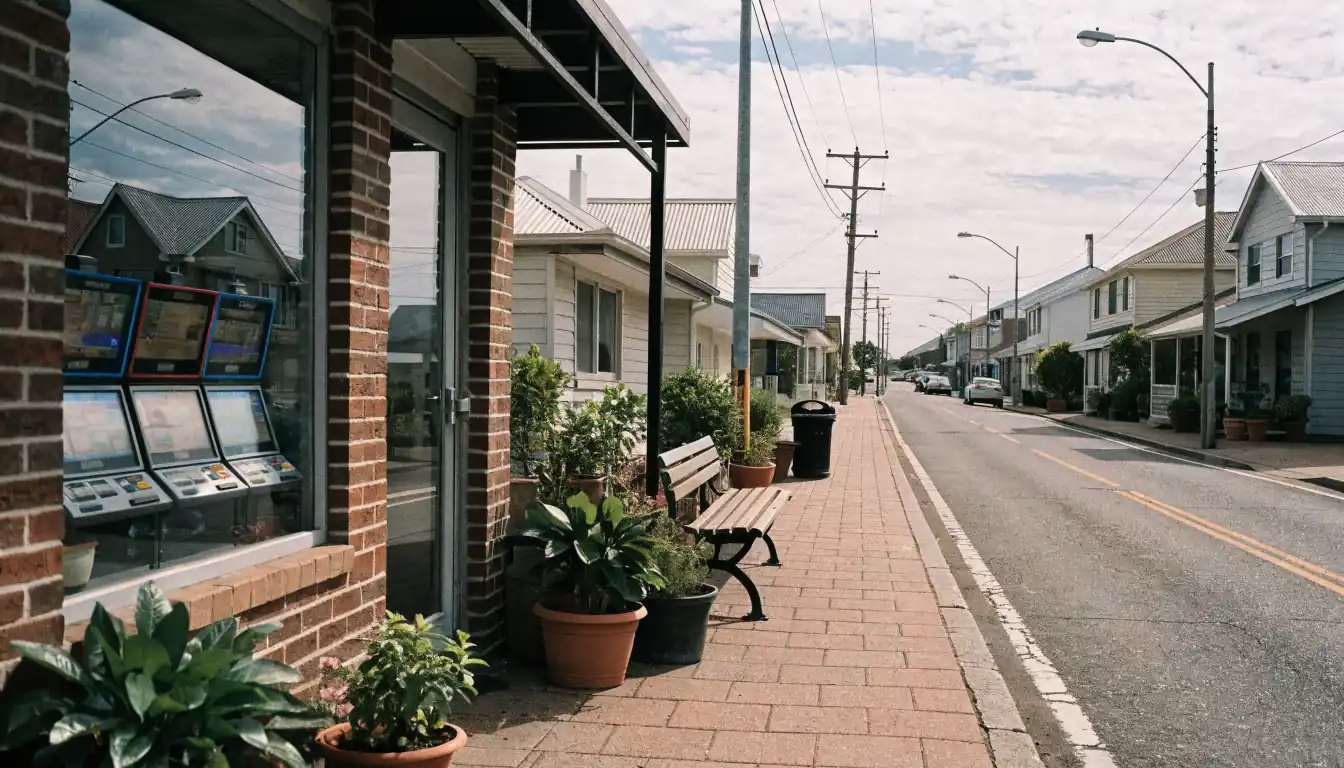
I remember this vividly because it was the first time in my adult life that the constant background hum of gaming machines — the thing I’d complained about, joked about, spent too much money feeding — simply wasn’t there. Clubs shut. Pubs shut. The machines sat dark. For anyone doing the numbers on gaming machine activity, revenue, or venue behaviour across that stretch, 2020 isn’t really comparable to any other year. It’s a blank spot, a total interruption in a seventy-year run that had otherwise been continuous since 1956.
I bring this up here, in the landscape section, because it’s easy to look at any "before and after" figures around NSW gaming machines and assume some kind of steady trend line. There isn’t one. There’s a hard stop in the middle of the timeline, and whatever numbers you’re comparing on either side of that stop need to be read with that gap in mind. It’s not a detail that changes hours of operation or payout rates — those get covered elsewhere — but it does change how you should think about the "history" side of this landscape. NSW’s gaming machine story isn’t one smooth curve from 1956 to now. It’s decades of growth, then a sudden and total halt, then a return to something that looked similar but wasn’t quite the same venue-by-venue as before.
Casinos, pubs and clubs: not the same animal
I think a lot of people picture "pokies" and imagine one generic setting — dim lighting, carpet that’s seen better days, a bar in the corner. In reality, the venues housing gaming machines in NSW split into genuinely different categories, and the difference matters more than it looks from outside.
Clubs are the backbone of the NSW machine count. RSLs, leagues clubs, bowling clubs — these are membership-based venues that, in many cases, built their entire operating model around gaming machine revenue subsidising cheap meals, sports facilities, and community events. If you’ve ever wondered why a club can sell you a schnitzel for less than it costs to make, the machines in the next room are usually part of the answer. Clubs tend to have the highest concentration of machines per venue among the non-casino categories, and they’re where most of that 2,195-venue count actually lives.
Pubs carry gaming machines too, but generally in smaller numbers per venue than clubs. A local pub might have a modest bank of machines tucked into a side room or a designated gaming area, separate from the main bar, often because of layout requirements around how gaming areas need to be configured relative to the rest of the venue.
High concentration of machines; revenue funds membership fees, sports facilities, and community programs.
Fewer machines per venue; primarily serve local patrons with modest gaming areas.
Small number of venues but the highest machine density in a single location, offering a classic “pokies” experience.
Casinosare the smallest category by venue count but the most concentrated by machine density in a single location. This is where the popular image of “pokies” — rows and rows of machines under one roof — actually lives. But numerically, casinos are a small slice of the 2,195 venues carrying NSW’s 87,298 machines. The bulk of the state’s gaming machine footprint isn’t glamorous. It’s suburban, it’s local, and it’s mostly attached to a bar or a bowls green.
I think this distinction actually answers a question a lot of people are quietly asking when they go looking for "the best" pokies in NSW: are we talking about the best casino floor, or the best local club? Because those are different searches with different answers, and conflating them is how people end up disappointed. If you want the concentrated, high-machine-count experience, casinos deliver that in a single location. If you want the community-embedded, subsidised-schnitzel, this-is-basically-my-local version, clubs are where that lives, and there are vastly more of them to choose from.
Regulation: who actually runs this
Because gaming machines fall under state jurisdiction, NSW has its own regulatory structure overseeing how machines are licensed, capped, and monitored. Liquor & Gaming NSW is the body responsible for that oversight in the state — it’s the regulator sitting behind licensing decisions, compliance checks, and the kind of rule-making that produced the cash-input cap I mentioned earlier.
I want to be careful here not to overstate what I actually know about the fine mechanics of how Liquor & Gaming NSW operates day to day, because the honest answer is: from the outside, as a player, you mostly don’t see the regulator at all. You see the outcome of its work — the cap on a new machine, the venue’s operating licence sticker near the door, the fact that a club’s gaming room looks a certain way and follows certain physical layout rules — without ever directly interacting with the body making those calls. That’s normal. Most people playing gaming machines in NSW have never heard of Liquor & Gaming NSW and don’t need to in order to sit down and play. But it’s worth knowing the name exists, because if you ever have a genuine dispute with a venue over how a machine behaved, or a question about a venue’s licensing status, that’s the body whose remit covers it.
What I do know for certain is that this state-based structure is why NSW’s rules look different from Victoria’s, Queensland’s or Western Australia’s. There’s no federal pokies regulator harmonising all of this into one national standard. Each state built its own system, on its own timeline, responding to its own political pressures — and NSW’s system, being the oldest, carries the most history and arguably the most entrenched venue network of any of them.
Why NSW’s machine count dwarfs comparisons
I looked into how NSW’s numbers stack up against other states, partly out of curiosity and partly because I wanted to know if 87,298 machines was actually a big number or just sounded big out of context. It’s a big number. Western Australia, by contrast, restricts its electronic gaming machines to a single casino floor — the Crown Perth casino resort — housing somewhere in the vicinity of a few thousand machines total. That’s an entire state’s legal gaming machine allocation sitting in one building, compared to NSW’s near-90,000 spread across more than two thousand venues.
That comparison isn’t really about which state has "better" pokies — it’s about understanding just how different the landscape can be depending on which side of a state border you’re standing on. In WA, if you want to play a gaming machine, there’s exactly one place in the state where that’s legal outside of that single casino. In NSW, there are 2,195 places, and you’re more likely to be standing in one without realising quite how big the surrounding network actually is.
I think this scale is the single most important thing to understand about NSW before getting into anything more specific — hours, cashless trials, payout figures, all of it. Every other detail about the NSW gaming machine scene sits on top of this base fact: it’s the oldest legal gaming machine market in the country, and by sheer venue and machine count, it’s also the largest. That combination of age and scale is what makes NSW simultaneously the most established and the most complicated pokies market in Australia to actually navigate as a player.
The community-funding angle nobody explains properly
Something I didn’t appreciate until I’d spent real time around NSW clubs specifically: the machines aren’t just there to generate profit for a private operator in the way, say, a casino floor might be structured. In the club sector, gaming machine revenue is tightly bound up with the club’s broader existence — subsidising memberships, function rooms, sporting teams, cheap counter meals, and community programs that have nothing directly to do with gambling.
This is genuinely part of why the machine count in NSW is what it is. It’s not simply that operators wanted to install as many machines as licensing allowed for pure profit extraction — it’s that an entire tier of community infrastructure, the club network, grew up leaning on gaming machine income as a core funding source. Pull the machines out of that equation and a lot of local clubs would look completely different, structurally, not just financially.
I’m not saying this to defend the scale of the machine count or to wave away any concerns about it — that’s not really what this section is for. I’m saying it because it explains something about why NSW’s numbers look the way they do compared to other states, and why regulatory change here tends to move cautiously rather than dramatically. When gaming machine revenue is threaded through community club funding at this scale, any regulatory shift — like the cash-input cap — has ripple effects well beyond the machine itself. It touches how clubs plan budgets, how venues think about renovating gaming floors, and how the whole ecosystem around "the pub with the pokies out back" actually functions.
What "best" even means in a market this size
Given all of this — 87,298 machines, 2,195 venues, seventy years of continuous history interrupted only by a total pandemic shutdown, and a regulatory cap that only bites on new machines going forward — I think it’s worth being honest about what a search for the "best pokies in NSW" is actually asking for. There is no single best venue in a market this fragmented. There’s no one casino floor or club that represents the whole state, the way Crown Perth effectively is the whole of WA’s legal gaming machine market by default.
What exists instead is a genuinely enormous spread of options, differentiated mostly by venue type — casino versus club versus pub — and, increasingly, by how new or old the machine fleet in a given venue actually is, given that the cash-input cap only applies to machines installed from mid-2023 onward. If you’re chasing a specific kind of experience, whether that’s a big-room casino floor or a local club where the machine sits twenty metres from a schnitzel special, NSW can offer both, at a scale no other state can currently match.
Defining “best” pokies
The “best” pokies depend on whether you prefer a high‑volume casino floor or a community‑focused club or pub.
I’ll be upfront: I don’t think bigger automatically means better here. More machines and more venues just means more variance — more ways to have a great night, and just as many ways to have a forgettable one. What NSW’s scale actually buys you, as a player, is choice. Seventy years of legal history and near enough to ninety thousand machines means you’re never short of somewhere to sit down. Whether that somewhere is any good is a different question entirely, and one that depends far more on the specific venue than on any state-wide statistic.
The short version, if you’re just skimming
- NSW legalised poker machines first, in 1956 — the oldest legal gaming machine market in the country.
- The state currently has 87,298 machines spread across 2,195 venues, the largest combined footprint of any Australian state.
- Most of that footprint sits in clubs and pubs, not casinos — casinos are a small slice of total venues, even if they’re the most visually associated with “pokies” in people’s minds.
- A AU$500 cash-input cap applies to new electronic gaming machines installed from 1 July 2023 onward, though it doesn’t retroactively apply to older machines already on venue floors.
- 2020 is a dead zone in any historical comparison — every venue with poker machines closed during the pandemic, dropping usage to zero across the board.
- Regulation is entirely state-based in Australia, which is why NSW’s rules, caps and venue landscape look nothing like what you’d find crossing into Victoria, Queensland or Western Australia.
Everything else worth knowing — how the state’s 24-hour venues actually work, what happened with the cashless-gaming trial, where the legal line sits around online play, and what’s publicly known about payout rates — builds on top of this foundation. But this is the base layer: a market that’s old, large, deeply embedded in community life through the club system, and shaped as much by a single pandemic-driven blank year and one recent cash cap as by anything else in its long regulatory history.
24‑hour pokies in NSW and the cashless‑gaming experiment
Ask around any club in Sydney’s west and someone will tell you the gaming room never actually closes. That’s not an exaggeration in a lot of venues — plenty of clubs and pubs across NSW run their gaming machines around the clock, seven days a week, with no shutter coming down at midnight or 3am. You walk past at any hour and the lights are still on, the machines are still lit up, someone’s still sitting there.
I used to think that was just how it worked everywhere. It’s not. Some states put hard limits on session length or force a break in play. NSW, for the most part, doesn’t stop the clock on you. That’s worth knowing before you plan a night out expecting things to wind down — they don’t, and that’s exactly the point for venues that rely on gaming machine revenue to keep the lights on in the first place.
The always-open model isn’t unique to one type of venue either. You’ll find it in suburban clubs, in bigger licensed hotels, in the kind of place that also does schnitzels and trivia night. The machines don’t care what else is going on in the building.
Why the rules differ from state to state
Here’s the part that actually surprised me when I looked into it properly: there’s no single national rulebook telling every venue in Australia when to open or close its gaming floor, what a machine has to pay back, or how a session should be capped. Gambling regulation in this country is split between the states and the Commonwealth, and each state runs its own show. NSW does things one way, Victoria does them another, and nobody’s obligated to match up.
That’s why a 24-hour gaming room is unremarkable in NSW but would look completely different under Victorian rules. It’s not that one state is "tougher" and the other "looser" across the board — they’ve just made different calls on different parts of the system, and opening hours happen to be one of the more visible differences.
The cashless trial nobody signed up for
NSW ran a pilot in 2024 to test cashless gaming — the idea being that instead of feeding notes into a machine, you’d play using a card or account linked to your identity, with the system tracking play instead of it staying anonymous like it does with cash. On paper, this is meant to make problem gambling easier to spot and self-exclusion easier to enforce.
In practice, out of 12,000 patrons who had the option, only 14 actually used it.
Fourteen. Out of twelve thousand.
I’m not going to pretend that number needs much commentary. When almost nobody chooses to opt into something voluntarily, that tells you plenty about how popular the idea was on the ground, whatever the merits of the policy itself. Cash stayed king. People kept doing what they’d always done, and the trial mostly proved that asking politely doesn’t move behaviour much when the alternative — anonymous cash play — is still sitting right there as the default.
What’s coming from next door
Victoria isn’t waiting to see how NSW’s voluntary approach plays out. From 1 December 2025, Victoria is making carded play mandatory for gaming machines — not an opt-in pilot, a requirement. If you want to play, you’ll need a card tied to your identity, full stop.
That’s a genuinely different approach to the same problem, and it’s happening at the same time NSW is still sitting with a pilot that barely got any voluntary uptake. Whether NSW eventually follows Victoria’s lead or sticks with a softer, opt-in model is an open question — and given how regulation here is carved up state by state, there’s no guarantee the two will end up looking anything alike even a few years from now.
If you play in NSW right now, none of this affects your Friday night yet. Cash still works. Cards aren’t compulsory. But it’s the kind of shift worth watching if you play regularly, because "voluntary trial with 14 participants" is usually not where these things end — it’s where they start before someone decides voluntary isn’t working.
What this actually means if you’re playing tonight
- Hours: plenty of NSW venues run gaming machines continuously, so “closing time” for the gaming room and closing time for the rest of the venue aren’t necessarily the same thing.
- Cash vs card: cash play remains the default and overwhelming choice in NSW. The cashless option exists in some venues following the 2024 pilot, but almost nobody’s using it.
- No compulsory tracking, yet: unlike Victoria’s incoming carded-play requirement, NSW hasn’t mandated anything similar. Whether that changes is genuinely unclear.
- Different state, different rules: if you’re used to playing interstate, don’t assume the same setup applies once you cross the border. It usually doesn’t.
None of this tells you which machine pays better or where the best room in Parramatta is. It just tells you the shape of the system you’re stepping into — always open, still mostly cash, and quietly being watched by regulators who haven’t decided yet whether "quietly" is good enough.
Online pokies, Crown casinos and the legal limits in NSW
Here’s where a lot of people get confused, and I was one of them for a while. You walk into a venue in NSW, play a few gaming machines, no problem. So surely there’s a NSW casino online pokies version you can just fire up on your phone at home? There isn’t. Not legally, anyway.
The Interactive Gambling Act makes it an offence for an operator to provide online casino games to Australian residents. That’s the operator’s problem, not yours, but it’s also why you won’t find a legit "crown casino NSW pokies" app or website. Crown’s role in this state is physical: a venue you walk into, not a platform you log into. There’s no legal crown NSW casino pokies product sitting on the other side of a login screen, and if you find something calling itself that, it’s not actually connected to Crown at all.
What you will find, if you go looking, are offshore sites happy to take your money and dress themselves up with lines like "online pokies NSW no deposit bonus." I’ve clicked a few out of curiosity. They look fine. They’re outside Australian law, and outside anything ACMA can regulate directly on the operator’s end — which is exactly why ACMA has blocked more than 1,564 illegal gambling sites since November 2019 through referral notices to internet providers.
Blocked sites keep popping back up under new domains. That’s the nature of it.
So the honest split is this: pokies in NSW are a room-you-walk-into thing. Online, for residents here, isn’t a legal parallel version of that — it’s a separate, unregulated space you’d be stepping into on your own.
NSW pokies payout percentages: what we know
Here’s the annoying truth: I can’t tell you the exact payout percentage for gaming machines in NSW. Nobody’s handed me an audited figure, and I looked.
NSW does not publish official payout percentages for its gaming machines, so any claimed figures should be treated with caution.
What I can tell you is how other states handle it, because that’s public. Queensland sets a floor of 85% in pubs and clubs, 90% in casinos. Victoria mirrors that 85% minimum. Western Australia, where every machine sits on the Crown Perth casino floor, requires 90%. NSW hasn’t published an equivalent number in what I’ve found, at least not one I’d stake anything on.
So when someone tells you "NSW pays out X%", ask where that number came from. Usually nowhere real.
What NSW has done instead is cap how much cash you can feed into new machines, a rule that landed in mid-2023. That’s a spending control, not a return rate, and the two get confused constantly.
Until Liquor & Gaming NSW publishes something concrete, the honest answer is: we don’t know the exact figure. Anyone selling you a precise percentage for this state is guessing too.